
RICHI

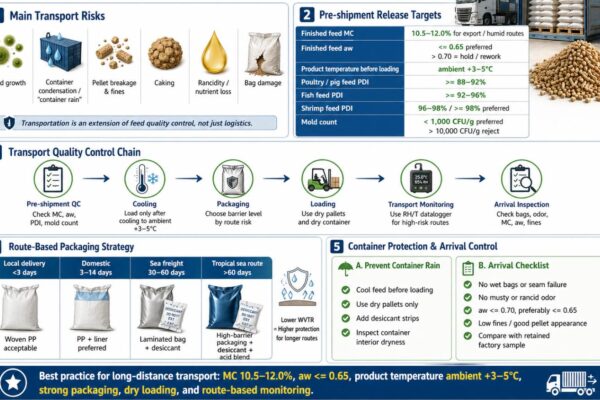
How To Control Feed Quality During Long-distance Transportation?

Long-distance transportation is a critical but often underestimated risk stage in animal feed quality control. Even when feed leaves the factory with acceptable moisture content, pellet durability, temperature, and microbiological condition, quality can deteriorate during truck transport, rail movement, sea container shipping, port storage, distributor warehousing, or final farm delivery. The main technical risks include…
Read More

How To Prevent Mold Growth In Finished Feed Storage?

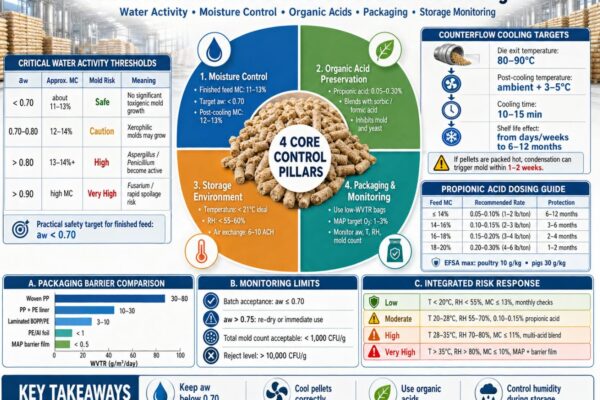
Mold contamination in finished animal feed storage is a persistent technical challenge that leads to mycotoxin accumulation, nutrient degradation, and significant economic losses. This paper systematically examines the biological thresholds and environmental parameters that govern fungal growth in stored compound feed, and presents evidence-based control strategies spanning post-pelleting moisture management, organic acid preservative selection and…

Read More

Shelf Life Control of Animal Feed Under High Humidity Conditions

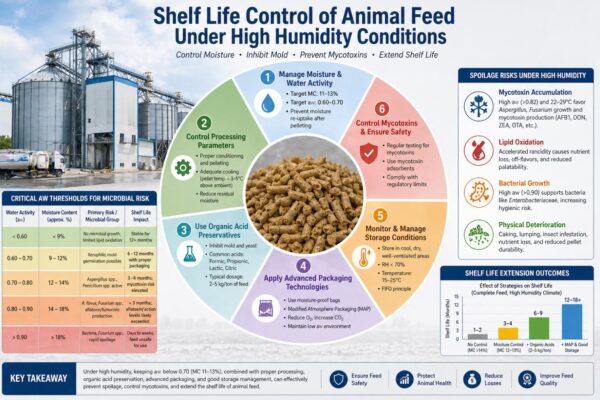
High ambient humidity is one of the most critical factors limiting the shelf life of compound animal feed. When feed moisture content exceeds 13–14% or water activity (aw) surpasses 0.70, conditions become favorable for mold proliferation, mycotoxin synthesis, lipid oxidation, and bacterial contamination. This article reviews the physicochemical mechanisms by which humidity accelerates feed deterioration,…

Read More

Steam Conditioning Control In Animal Feed Pellet Production

Steam conditioning is a decisive control point in the animal feed pelleting process. It determines whether mash feed enters the pellet mill die in a physical state suitable for compression, bonding, starch gelatinisation, microbial reduction, and stable production. In commercial feed mills, many pellet quality failures—low pellet durability, excessive fines, unstable pellet mill current, die…

Read More
Moisture Control in Animal Feed Production Process

Moisture Control In Animal Feed Production Process

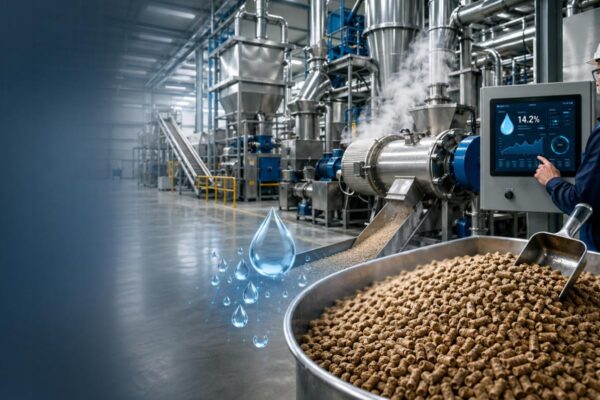
Moisture control is a central determinant of quality, safety, yield, and profitability in commercial animal feed manufacturing. Global compound feed production reached 1.396 billion metric tonnes in 2024—a 1.2% increase over the prior year—and the compound annual cost of uncontrolled moisture loss across this volume is substantial. Industry data estimate that evaporative moisture losses alone…

Read More