




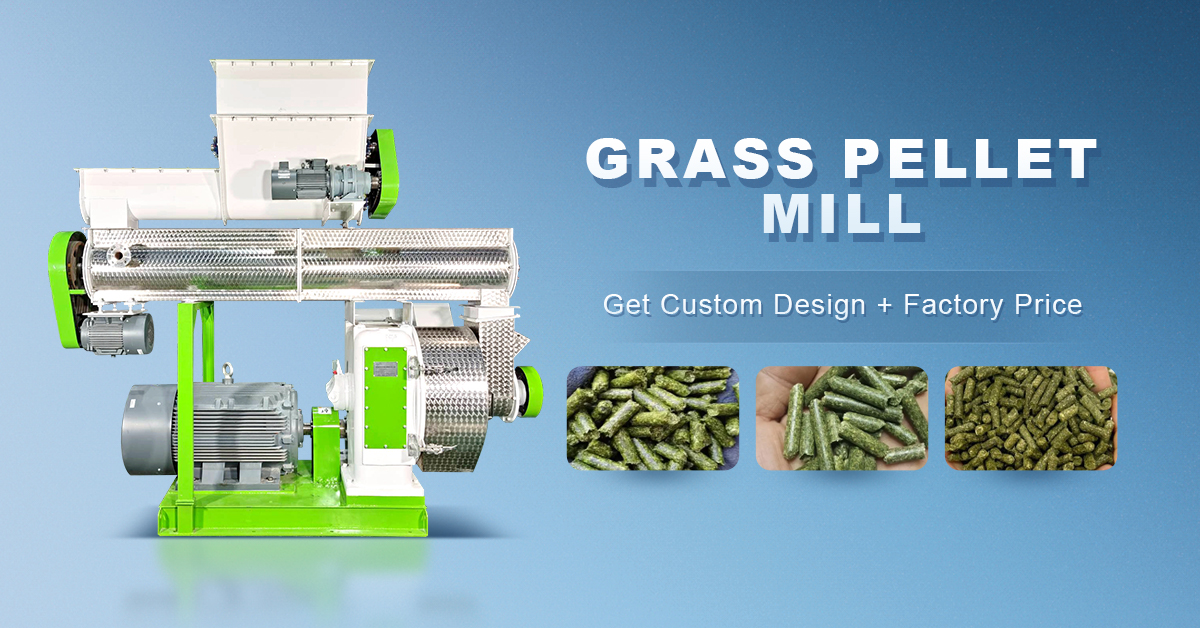
Introduction: The New Role of Alfalfa in Modern Farming
Agriculture is entering a new stage where efficiency, sustainability, and resource optimization are becoming increasingly important. Farmers and feed manufacturers are not only focusing on increasing production but also finding better ways to reduce waste and maximize the value of agricultural resources.
Alfalfa is one of the most valuable forage crops in livestock production. It provides excellent nutritional benefits and is widely used for dairy cattle, horses, sheep, goats, rabbits, and other herbivorous animals. However, traditional alfalfa utilization methods still face several limitations, including seasonal supply fluctuations, storage difficulties, and transportation challenges.
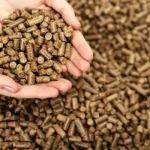
Pelletizing technology offers a modern approach to overcome these issues. By processing alfalfa into compact pellets, producers can create a stable feed product with improved handling characteristics and higher commercial value.
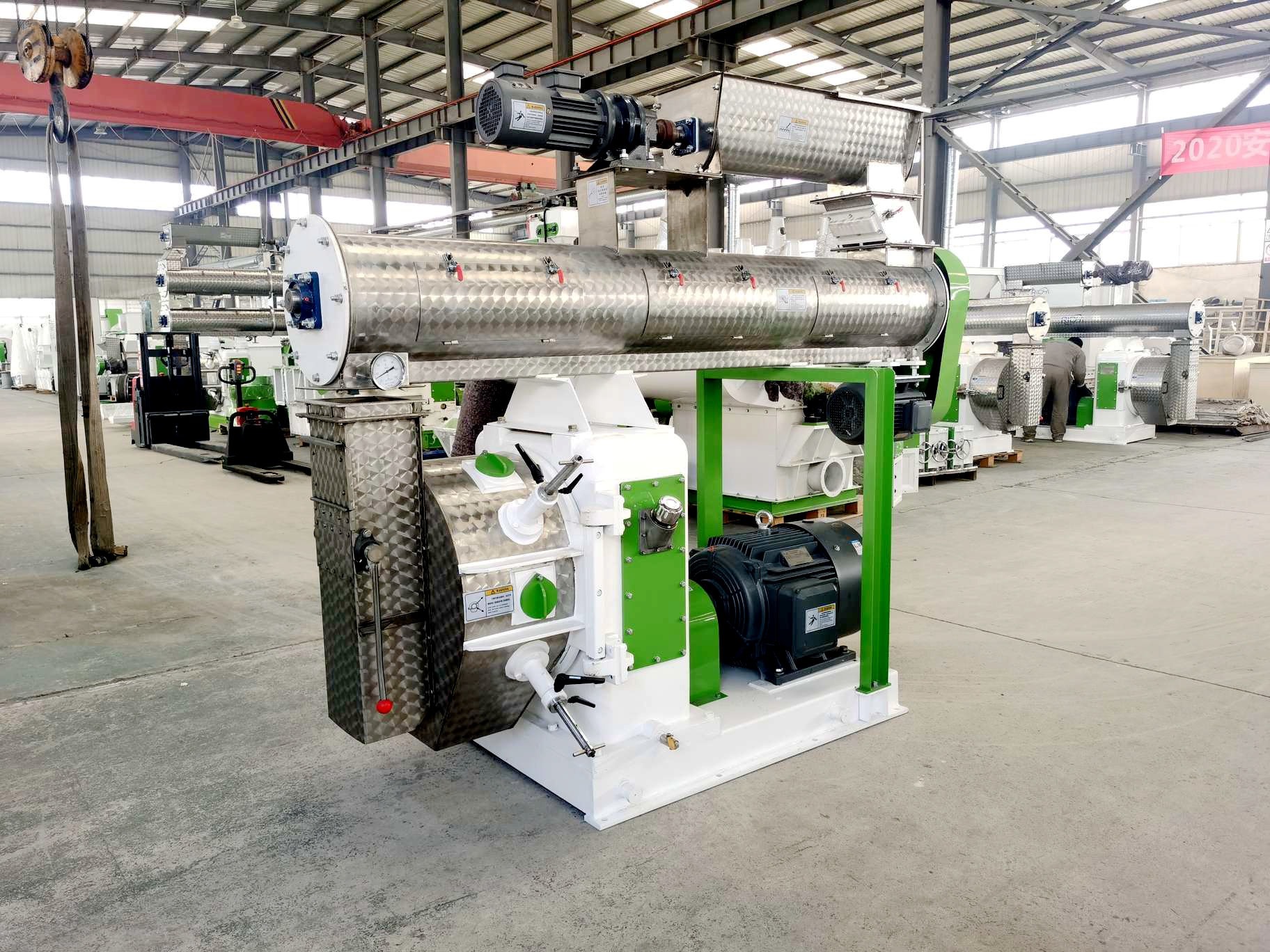
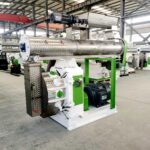
For agricultural companies planning to enter this market, investing in an alfalfa pellet mill for sale can help transform ordinary forage resources into a profitable and sustainable feed business.
Why Is Sustainable Feed Production Becoming More Important?
The global livestock industry is experiencing continuous changes. Farmers are facing rising operational costs, limited resources, and increasing demand for high-quality animal products.
Feed production plays a major role in farm profitability. Efficient feed processing can directly influence:
- Production costs
- Animal growth performance
- Storage management
- Supply chain stability
Traditional forage systems often depend heavily on weather conditions. Poor harvesting seasons may reduce hay quality and increase feed shortages.
Alfalfa pellet production provides a more controlled solution. Through mechanical processing, raw materials can be converted into standardized feed products that are easier to store and distribute.
This makes pellet technology especially valuable in regions where climate conditions or transportation systems create challenges for traditional forage management.
What Are the Main Advantages of Alfalfa Pellets?
Improved Nutritional Management
One of the biggest advantages of alfalfa pellets is consistency.
Loose hay may contain uneven nutritional distribution because animals often select certain parts of the material. Pelletized feed provides a more uniform product, helping farmers manage feeding programs more accurately.
For dairy farms, consistent nutrition is important for maintaining stable milk production. For horse farms, controlled feeding helps support animal health and performance.
Efficient Storage and Transportation
Storage is a major concern for many agricultural businesses.
Compared with traditional baled forage, pellets have higher density and require less storage space. This allows businesses to maintain larger feed reserves without expanding warehouse facilities.
Transportation efficiency is also improved because more usable feed can be delivered in each shipment.
Better Utilization of Agricultural Resources
Alfalfa pellet production helps reduce agricultural waste by creating additional value from forage crops.
Farmers can process excess alfalfa during harvest seasons and store it for later use instead of relying only on direct consumption.
This approach supports a circular agricultural model where resources are used more effectively.
(Related Post: https://biomasspelletizer.com/lucerne-pellet-machine/)
How Does a Commercial Alfalfa Pellet Production Line Operate?
A professional production system includes several important processing stages.
1. Material Receiving and Preparation
The process starts with collecting and preparing alfalfa materials.
The quality of raw materials directly affects pellet quality. Factors such as moisture content, fiber structure, and cleanliness should be carefully controlled.
2. Drying Process
Fresh alfalfa usually contains too much moisture for direct pellet production.
Drying reduces moisture levels and improves pellet forming performance. Depending on production requirements, different drying solutions may be selected.
3. Grinding Process
After drying, alfalfa enters the crushing stage.
The purpose of grinding is to create smaller and more uniform particles. Proper particle size improves compression efficiency and reduces equipment stress.
4. Pellet Formation
During the pelletizing stage, prepared materials are compressed through a die.
High pressure causes the particles to bond together and form strong cylindrical pellets.
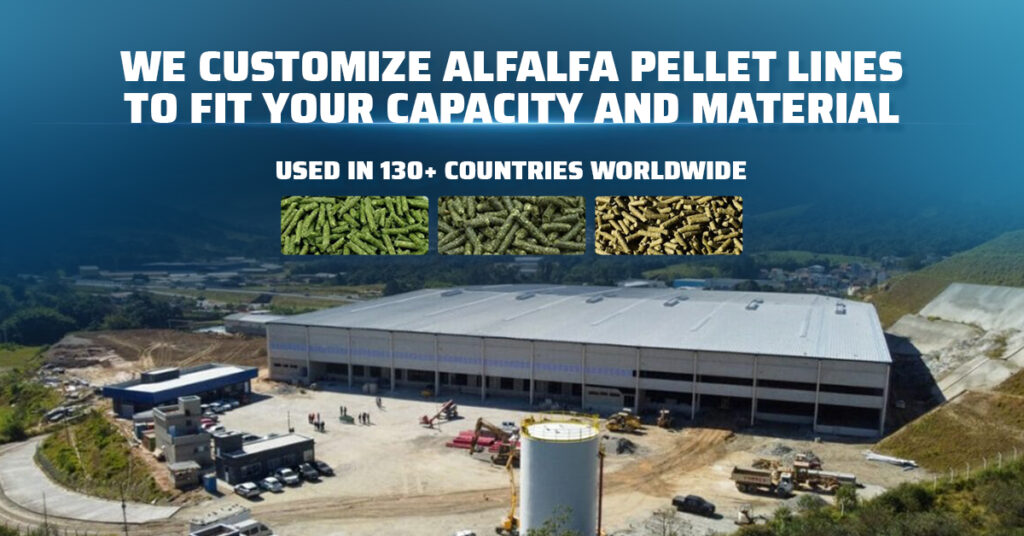
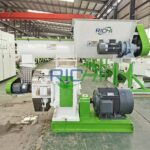
For businesses requiring commercial output, a 3-4 T/H alfalfa pellet production line for sale can provide stable production capacity for medium-scale feed manufacturing projects.
5. Cooling, Screening, and Packing
After pellet formation, cooling equipment reduces temperature and stabilizes moisture content.
Screening removes broken particles, while packaging equipment prepares the final products for storage or distribution.
Choosing the Right Equipment Partner for Your Project
A successful pellet business requires more than purchasing a machine. Proper planning, equipment configuration, and technical support are equally important.
A reliable supplier should be able to provide:
- Complete process design
- Equipment recommendations
- Installation guidance
- Operation training
- Long-term technical support
Companies should evaluate suppliers based on manufacturing experience, engineering capability, and project support.
Many agricultural investors choose pellet mill for sale solutions from professional manufacturers because they provide flexibility for different production requirements and raw materials.
How Can Alfalfa Pellet Plants Create New Business Opportunities?
The growing demand for high-quality animal feed creates opportunities for businesses that can provide reliable products.
Supplying Local Livestock Farms
Agricultural companies can produce alfalfa pellets for nearby farms that need stable feed sources.
This business model reduces transportation distance and allows producers to build long-term customer relationships.
Serving Regional Feed Markets
A larger pellet facility can supply multiple customers, including:
- Commercial farms
- Feed distributors
- Agricultural cooperatives
- Animal nutrition companies
Developing Specialized Feed Products
Some businesses combine alfalfa with other ingredients to create customized feed products.
Examples include:
- High-protein forage pellets
- Dairy cattle feed pellets
- Horse nutrition products
- Small animal feed pellets
This creates opportunities for market differentiation.
What Factors Affect the Profitability of an Alfalfa Pellet Project?
Before investing, businesses should analyze several key factors.
Raw Material Cost
The availability and price of alfalfa directly influence production costs.
Regions with abundant forage resources often have advantages because transportation expenses can be reduced.
Production Capacity
Choosing the correct capacity is important.
A system that is too small may limit business growth, while an oversized system may increase unnecessary investment.
Energy Efficiency
Modern equipment design focuses on reducing energy consumption while maintaining output.
Energy-efficient production can significantly improve long-term profitability.
Market Positioning
Successful businesses understand their customers.
Different markets may require different pellet sizes, packaging methods, and product specifications.
Technology Development Trends in Alfalfa Pellet Processing
The future of agricultural processing is moving toward automation and intelligent management.
Modern pellet plants are increasingly equipped with:
- Automatic feeding systems
- Digital control panels
- Production monitoring systems
- Energy-saving components
These technologies help improve production accuracy and reduce labor requirements.
Sustainable agriculture is also encouraging more companies to adopt efficient processing methods that maximize resource value.
Those interested in exploring more applications of forage processing technology can from this source learn additional information about modern pellet production concepts.
Common Mistakes to Avoid When Starting an Alfalfa Pellet Business
Ignoring Raw Material Testing
Different alfalfa varieties may have different characteristics. Testing raw materials before production helps determine suitable processing parameters.
Choosing Equipment Only Based on Price
Low-cost equipment may lead to higher maintenance expenses and unstable production.
Businesses should consider overall operating costs rather than initial investment alone.
Lack of Market Research
Before building a pellet plant, companies should understand local demand, customer preferences, and competitive conditions.
A clear market strategy improves business success.
Conclusion: Building a Sustainable Future With Alfalfa Pellets
Alfalfa pellet technology represents an important development direction for modern agriculture. It combines traditional forage resources with advanced processing methods to create higher-value feed products.
By improving storage efficiency, reducing waste, and supporting consistent animal nutrition, alfalfa pellets provide benefits for both farmers and feed businesses.
With proper planning, suitable equipment selection, and professional technical support, an alfalfa pellet project can become a sustainable investment opportunity in the growing global feed market.