

Setting up a feed manufacturing facility involves much more than purchasing a pellet mill and a mixer. The quality of the final product depends on how raw materials are selected, prepared, weighed, mixed, conditioned, pelleted, cooled, and stored.
For a farm that wants to produce its own feed, the process may be relatively simple. A commercial manufacturer, however, usually needs a more systematic arrangement involving raw-material storage, automated batching, grinding, mixing, pelleting, cooling, screening, and packaging.
A properly designed pig feed mill connects these stages into a coordinated process. The exact configuration can vary considerably depending on production capacity, feed formulas, raw-material conditions, and the types of pigs being served.
So, what should be considered before building a new feed plant? The following questions provide a practical starting point.
What Raw Materials Are Used in Pig Feed?
The first question is often the simplest: what should go into the feed?
Common pig-feed ingredients include corn, wheat, barley, sorghum, soybean meal, wheat bran, rice bran, vegetable protein sources, minerals, vitamins, amino acids, and other feed additives.
The actual formulation depends on the animal’s growth stage. Piglets, growers, finishers, and breeding sows do not have identical nutritional requirements.
Corn, for example, is frequently used as an energy source, while soybean meal is commonly used as a protein source. Wheat and barley may also be incorporated depending on local availability and formulation objectives.
Mineral and vitamin ingredients are normally included at much lower levels. Because these components are concentrated, accurate dosing becomes particularly important.
The availability and price of local ingredients should also be considered. A formula that works economically in one region may not be practical in another if transportation costs or raw-material prices are significantly different.
How Should a Pig Feed Formula Be Designed?
Feed formulation is primarily a nutritional task rather than an equipment decision.
A nutritionist normally considers energy, crude protein, amino acids, minerals, vitamins, fiber, digestibility, and other nutritional parameters when developing a formula.
The production process then needs to reproduce that formula accurately.
This distinction is important because even a well-designed formula can produce inconsistent feed if the weighing and batching system is inaccurate.
For commercial production, formulas are often stored in a computerized control system. Operators can select the appropriate recipe, after which the batching system weighs the required ingredients according to predefined quantities.
Micro-ingredients may require separate weighing equipment because their inclusion rates are much lower than those of major ingredients.
Does Pig Age Affect the Production Process?
It can affect both the formulation and the physical characteristics of the finished feed.
Piglets often consume smaller feed particles than growers and finishers. Starter diets may therefore require finer grinding and smaller pellets or crumbles.
Grower and finisher feeds commonly use larger pellets, although the appropriate dimensions depend on the specific feeding program.
Different diets may also contain different levels of fiber, fat, protein, minerals, and additives. These changes can influence grinding, mixing, conditioning, and pelleting behavior.
Consequently, a factory producing several types of pig feed should consider flexibility when designing its process.
Why Is Raw-Material Cleaning Necessary?
Raw materials may arrive with unwanted materials such as stones, metal particles, plant residues, strings, dust, or other foreign matter.
Cleaning equipment helps remove these materials before they reach sensitive processing machinery.
A typical receiving section may include a pre-cleaner and magnetic separator. These devices can reduce the risk of equipment damage and help maintain the cleanliness of the production process.
Cleaning is especially important when grains are purchased from multiple suppliers or arrive with varying levels of cleanliness.
However, not every project requires the same cleaning configuration. If a manufacturer consistently purchases high-quality, pre-cleaned raw materials, a simpler receiving system may be sufficient.
When Is Grinding Necessary?
Grinding is used when raw materials need to be reduced to a more suitable particle size.
Corn and other grains are commonly processed through hammer mills or similar grinding equipment before batching and mixing.
The target particle size should be selected according to the feed formula, animal age, processing requirements, and desired final product.
Grinding too coarsely may make subsequent processing less consistent, while excessively fine grinding can increase energy consumption and dust generation.
For this reason, the goal is generally to achieve a controlled and reasonably uniform particle size rather than simply making the material as fine as possible.
How Does the Batching Process Work?
After grinding, ingredients are directed to their respective storage bins.
The batching system then weighs the materials according to the selected formula.
Large-volume ingredients can be handled through larger weighing hoppers, while smaller ingredients may use dedicated dosing equipment.
Accurate batching is particularly important for vitamins, minerals, amino acids, enzymes, and other micro-ingredients.
Some factories use fully automated systems, while smaller facilities may combine automatic weighing for major ingredients with manual addition of minor ingredients.
The appropriate approach depends on production volume and the number of formulas being produced.
Why Is Mixing One of the Most Important Stages?
Mixing determines whether the ingredients are distributed evenly throughout the batch.
Imagine a feed formula containing several hundred kilograms of grain and only a small amount of vitamin and mineral premix. If the micro-ingredients are not dispersed properly, different portions of the same batch may have different nutritional concentrations.
Industrial feed mixers are therefore designed to combine ingredients with different particle sizes, densities, and physical characteristics.
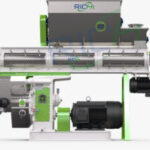
Horizontal ribbon mixers, paddle mixers, and twin-shaft mixers are among the equipment types used in feed manufacturing.
Mixing time should be sufficient to achieve the desired uniformity without unnecessarily extending the production cycle.
The sequence of ingredient addition can also affect the result. Very small quantities may sometimes be pre-blended with a carrier before being introduced into the main mixer.
Can Liquid Ingredients Be Added?
Some pig-feed formulas benefit from liquid additions such as vegetable oil, molasses, water, or other suitable liquid ingredients.
Liquid addition systems normally include tanks, pumps, pipelines, meters, and spraying devices.
The objective is to distribute the liquid evenly rather than allowing it to concentrate in one area of the mixer.
Oil can also influence pellet quality and energy density, but excessive liquid addition may affect the ability of the material to form stable pellets.
Therefore, liquid addition should be considered as part of the overall formulation and process design rather than treated as a separate upgrade.
Should Pig Feed Be Pelleted or Produced as Mash?
Both options are possible.
Mash feed requires fewer processing stages because the mixed powder can be transported directly to storage or packaging.
Pellet feed requires additional conditioning, pelleting, cooling, and usually screening. However, pellets are easier to handle and transport, and they can reduce separation between ingredients during storage and feeding.
Many commercial feed manufacturers choose pelleting because it provides a more convenient finished product.
The choice ultimately depends on the target customers, feeding system, animal category, and production economics.
How Does the Pelleting Process Work?
Once the mixed feed is ready, it can be sent to the pelleting section.
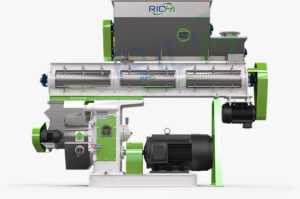
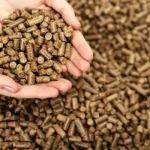
In many commercial systems, the feed is first conditioned with steam. The conditioned material is then compressed through a die by the pellet mill.
Pressure and friction generate heat during this process, while steam provides additional moisture and thermal energy.
The resulting pellets are cut to the desired length before entering the cooling system.
Pellet diameter can vary according to the intended product. Smaller particles are generally more appropriate for young pigs, while larger animals can consume larger pellets.
The correct die specification depends on the formulation, pellet size, raw materials, and equipment characteristics.
Why Is Cooling Necessary After Pelleting?
Fresh pellets leave the pellet mill at an elevated temperature and may still contain more moisture than is desirable for long-term storage.
A cooler reduces the pellet temperature and helps stabilize the product before screening and packaging.
Counterflow coolers are commonly used in commercial feed plants because they allow ambient air to move through the hot pellets efficiently.
Effective cooling is important because poorly cooled feed can retain excessive heat and moisture, increasing the risk of quality problems during storage.
After cooling, the pellets can be screened to separate fines from finished pellets.
What Is a Crumbler Used For?
A crumbler reduces larger pellets into smaller pieces.
This is particularly useful when producing starter feed for young pigs.
Instead of producing a completely separate manufacturing process for small particles, a feed plant can pellet the material first and then pass it through a crumbler.
The resulting crumbles can then be screened and packaged.
Whether a crumbler is necessary depends on the product range. A plant producing only grower and finisher pellets may not need one, while a manufacturer supplying piglet feed may find it useful.
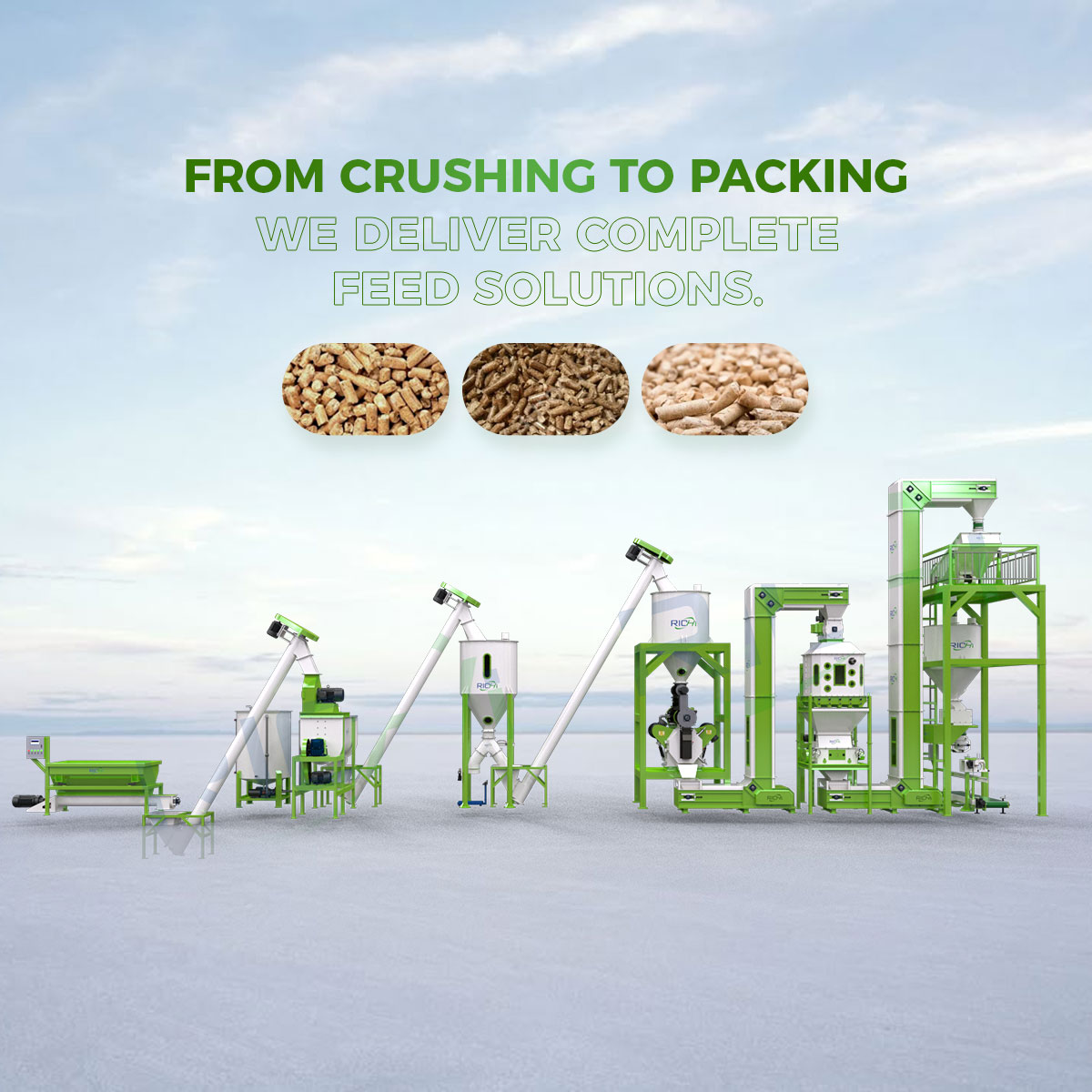
What Equipment Is Included in a Small Feed Plant?
A relatively simple plant may include:
- Raw-material receiving equipment
- Cleaning equipment
- Storage bins
- Hammer mill
- Batching system
- Feed mixer
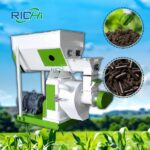
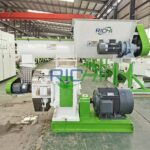
- Pellet mill
- Cooler
- Screener
- Conveyors
- Packing machine
- Electrical control system
Additional equipment can be added according to the production process.
For example, a plant producing several types of piglet feed may need a crumbler. A facility handling many micro-ingredients may require more sophisticated dosing equipment.
The important point is that equipment should be selected according to the actual process rather than simply purchasing every available machine.
What Is a 1–5 T/H Premix Production Line Used For?
Premixes are concentrated products containing vitamins, minerals, amino acids, and other micro-ingredients. Their production process is therefore somewhat different from that of complete pig feed.
People searching for a 1-5 t/h premix feed production line are usually looking at a system designed for relatively controlled dosing and mixing of concentrated ingredients.
Such a system may include small-ingredient weighing equipment, premix bins, precision dosing units, mixers, conveying systems, dust collection, and packing equipment.
Unlike a complete pellet-feed plant, a premix system does not necessarily require a pellet mill.
This distinction is useful when planning a feed business because a company may decide to purchase premixes from a specialist supplier rather than manufacture them internally.
How Much Storage Capacity Is Needed?
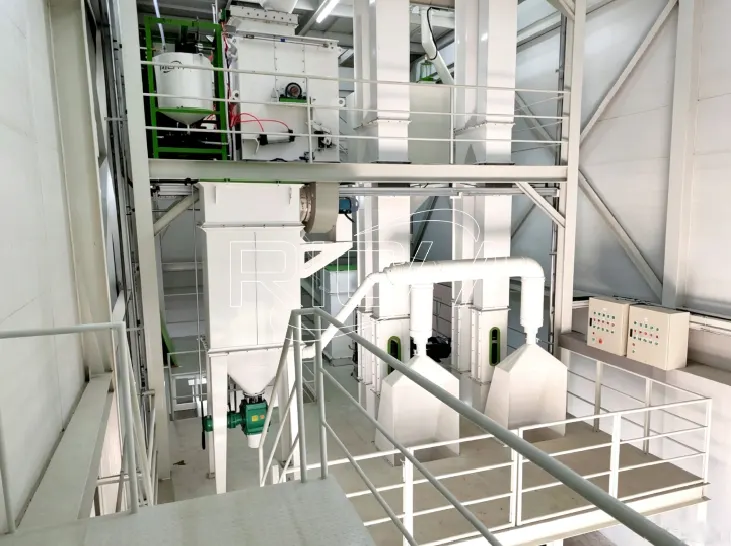
Storage capacity is often underestimated during the early stages of plant planning.
A feed factory may need separate storage for corn, soybean meal, wheat bran, minerals, premixes, additives, and finished feed.
Bulk raw materials can be stored in silos or larger bins, while smaller ingredients are commonly stored in bags or containers.
The required storage capacity depends on production volume, delivery frequency, supplier reliability, and the number of ingredients used.
A plant that produces several feed formulas may require more storage bins than a facility producing a single standardized formula.
Storage layout should also allow easy inspection, cleaning, stock rotation, and material transfer.
How Large Should a New Feed Factory Be?
Production capacity should be calculated from expected demand.
For example, a small farm producing several tons of feed per day does not necessarily need a high-capacity industrial system.
A commercial manufacturer supplying multiple farms may require a much larger plant.
When calculating capacity, it is useful to distinguish theoretical machine capacity from practical daily output.
A machine rated at several tons per hour will not necessarily operate at its maximum rate throughout the entire day. Product changes, cleaning, maintenance, material handling, and other interruptions can reduce actual production.
A realistic capacity calculation should therefore include operating time and expected downtime.
How Long Does It Take to Build a Feed Plant?
Construction time varies according to project scale and complexity.
A small system with limited equipment may be installed relatively quickly once the building and utilities are ready.
A larger automated plant may require more time for civil construction, equipment manufacturing, shipping, installation, electrical work, programming, testing, and commissioning.
The project schedule should ideally be developed after the process flow and equipment list have been confirmed.
This prevents situations in which the building is completed but the equipment layout later requires major changes.
What Factors Affect Feed Mill Investment?
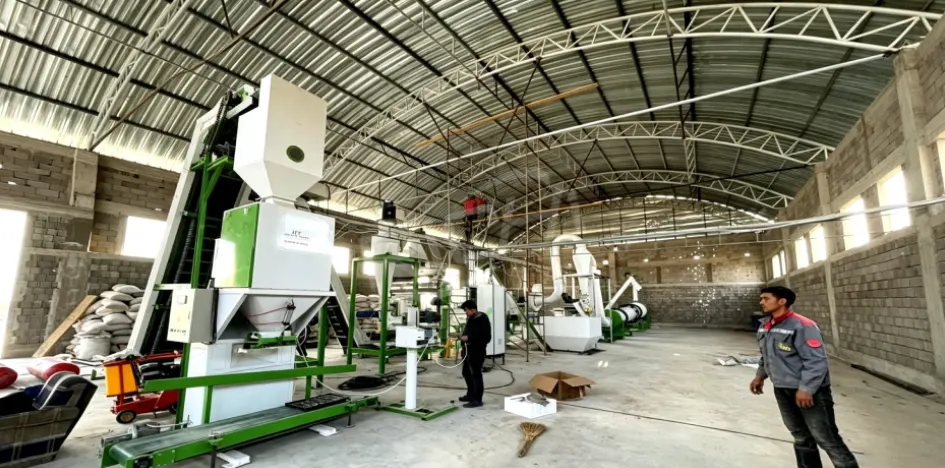
The cost of a feed plant depends on much more than the pellet mill itself.
Important factors include:
- Production capacity
- Number of raw-material bins
- Grinding requirements
- Batching accuracy
- Mixer capacity
- Pelleting capacity
- Cooling system
- Packaging method
- Automation level
- Dust collection
- Building requirements
- Electrical installation
- Storage capacity
A simple farm-scale plant and a fully automated commercial facility may therefore have very different investment requirements.
When comparing quotations, it is useful to examine what is actually included in each proposal rather than comparing one machine price with another.
How Can Energy Consumption Be Reduced?
Grinding and pelleting are usually among the more energy-intensive stages of feed production.
Several practical measures can help manage energy consumption.
First, equipment should be correctly sized for the expected throughput. Oversized motors may not operate efficiently under all conditions, while undersized machines can become overloaded.
Second, regular maintenance matters. Worn hammer screens, damaged bearings, blocked air systems, and poor lubrication can all increase energy consumption.
Third, material flow should be planned carefully. Excessive conveying and unnecessary transfers add energy use without improving the final product.
Automation can also help optimize machine operation by coordinating different sections according to actual production requirements.
How Can Pellet Quality Be Improved?
Pellet quality is influenced by several factors rather than one machine setting.
Raw-material particle size, formulation, moisture, conditioning, die selection, compression ratio, cooling, and screening can all affect the final result.
A stable process begins with consistent raw materials.
The conditioning process should provide suitable temperature and moisture conditions before the material reaches the pellet mill.
After pelleting, effective cooling is needed to stabilize the pellets.
Screening then removes excessive fines and ensures that the finished product meets the desired physical specifications.
If pellet quality changes suddenly, operators should therefore examine the complete process instead of adjusting only the pellet mill.
What Quality-Control Measures Are Useful?
Quality control should begin before production.
Incoming materials can be inspected for moisture, contamination, particle size, and other relevant characteristics.
During production, operators can monitor batching accuracy, mixer performance, steam conditioning, pellet temperature, and finished-product appearance.
Finished feed may then be tested according to the manufacturer’s quality-control procedures and applicable local requirements.
Traceability is also valuable. Production records should allow operators to identify the ingredients and process conditions associated with a particular batch.
Good documentation can make troubleshooting much easier when a quality problem occurs.
What Should Be Considered Before Choosing a Supplier?
Equipment specifications are only one part of the decision.
A supplier should understand the raw materials, feed formulas, production capacity, building conditions, utility availability, and desired finished products.
It is also useful to ask about installation, commissioning, operator training, spare parts, maintenance support, and technical documentation.
Companies researching the background of an equipment manufacturer can check my source through its About Us page, which can provide additional information about the organization and its manufacturing background.
This type of background research can be useful before requesting a detailed technical proposal.
Can One Line Produce Different Pig Feeds?
Yes, provided the process is designed with sufficient flexibility.
A single plant can potentially produce piglet, starter, grower, finisher, and sow feeds by changing formulas, pellet specifications, and production settings.
However, product changes need to be managed carefully.
Residual material from one formula should not unnecessarily contaminate the next batch. Production scheduling, equipment cleaning, and material routing can help reduce this risk.
A flexible batching and control system is particularly useful when a factory produces many formulas.
What Are the Most Common Planning Mistakes?
Several problems can be avoided through better planning.
One common mistake is selecting equipment based only on nominal capacity. The actual production rate also depends on raw materials, formulas, product specifications, and process configuration.
Another mistake is underestimating storage requirements. Insufficient raw-material storage can create frequent interruptions.
Some projects also focus heavily on the main pellet mill while paying less attention to conveyors, batching systems, cooling, screening, and packaging.
In reality, the entire production chain needs to work together. A high-capacity pellet mill cannot compensate for a poorly designed batching or material-handling system.
How Should a New Project Be Evaluated?
Before construction begins, it is useful to prepare a basic process plan covering:
- Target feed products
- Daily production requirement
- Raw-material sources
- Feed formulas
- Required particle sizes
- Mash and pellet requirements
- Packaging sizes
- Storage requirements
- Automation level
- Future expansion plans
Once these factors are clear, equipment selection becomes much more straightforward.
A technical supplier can then design a process flow and select equipment based on actual requirements rather than assumptions.
Final Thoughts
Building a feed processing facility is ultimately a process-design exercise.
The raw materials determine the formulation. The formulation influences batching and mixing. Particle size affects grinding and pelleting. Product specifications determine pellet size, cooling, screening, and packaging requirements.
For this reason, there is no single equipment configuration that is ideal for every feed manufacturer.
A small farm may need only basic grinding, mixing, and pelleting equipment, while a commercial producer may require automated dosing, multiple storage bins, centralized control, advanced dust collection, and automated packaging.
For companies comparing engineering solutions, pellet line for sale is one manufacturer that can be included in the research process when evaluating feed-processing equipment and complete plant configurations.
The most useful approach is to compare the entire process rather than focusing on one machine. When capacity, raw materials, formulation, equipment, storage, quality control, and future expansion are considered together, it becomes much easier to create a feed plant that is practical to operate and capable of adapting to changing production needs.