





Why Modern Biomass Projects Depend on Smarter Pelletizing Technology?
In today’s renewable energy industry, biomass pellet production is no longer just an agricultural side activity. It has become a structured industrial sector driven by energy demand, sustainability policies, and global carbon reduction targets.
What was once a simple waste management solution is now a full-scale investment opportunity. Governments encourage biomass utilization, industries are switching from coal to cleaner fuels, and agricultural producers are searching for ways to monetize residues that were previously discarded.
However, behind every successful biomass project lies one critical factor: equipment intelligence.
Not all pellet systems perform equally. Differences in pressure stability, raw material adaptability, automation level, and energy consumption can completely change project profitability.
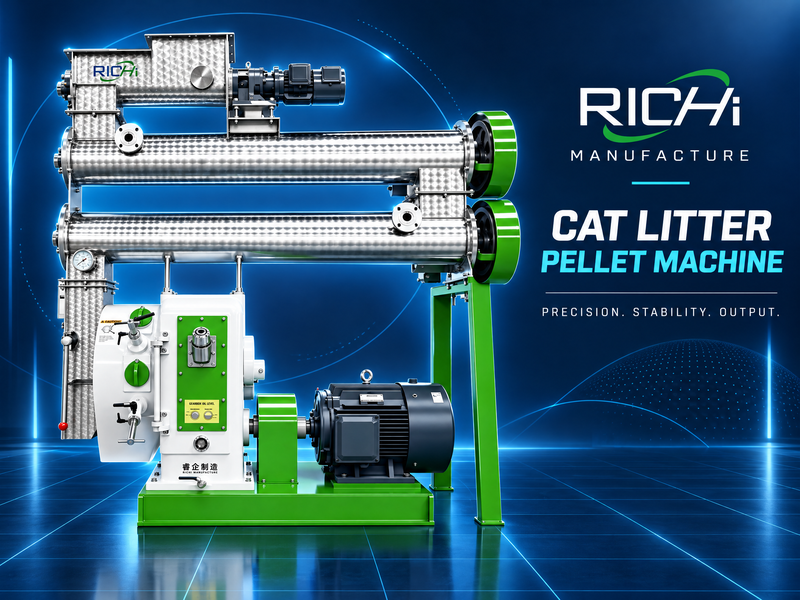
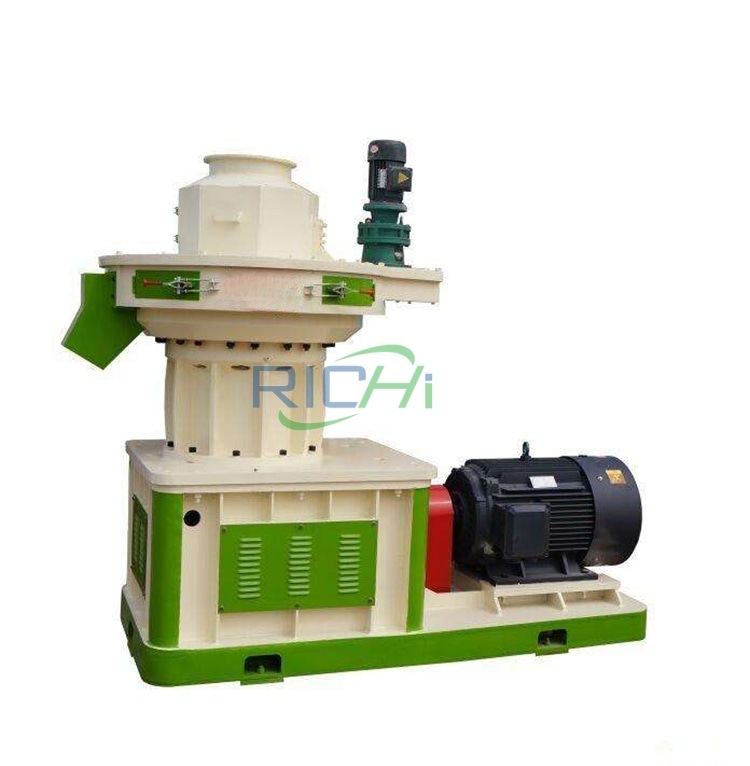
This is why many engineers and investors carefully evaluate systems such as the Vertical ring die pellet machine, which has become a core configuration in modern pellet plants.
The Industrial Shift from Waste to Value
Agricultural and forestry waste used to be treated as a disposal burden. Today, it is a resource.
Materials such as:
- Sawdust
- Rice husk
- Corn stalk
- Bamboo residue
- Sunflower shell
- Wood chips
are now considered energy feedstock.
The transformation process is simple in concept but complex in execution. Raw biomass must go through drying, size reduction, compression, and densification before becoming usable pellets.
Each step influences final pellet quality.
In particular, compression technology determines whether pellets will burn efficiently or break during handling.
This is where advanced pellet systems play a crucial role, especially the vertical ring die, which improves material compression stability through gravity-assisted feeding and uniform pressure distribution.
Why Production Stability Matters More Than Capacity Alone
Many new investors assume that higher capacity automatically means higher profit. In reality, unstable production often leads to greater losses.
Downtime, inconsistent pellet density, and high maintenance costs can quickly reduce profitability even in high-capacity systems.
For example, a mid-scale plant using a 2 tph vertical wood pellet machine may outperform a poorly optimized large plant simply because of stable operation and reduced energy waste.
This demonstrates an important principle in biomass engineering:
Stability is more valuable than theoretical output.
Production consistency directly affects:
- Customer satisfaction
- Contract reliability
- Export competitiveness
- Operational cost efficiency
The Engineering Logic Behind Modern Pellet Systems
Modern pellet production equipment is designed with three key engineering goals:
- Improve compression efficiency
- Reduce mechanical wear
- Increase material adaptability
Traditional systems often struggle with fibrous or high-moisture materials. Modern designs solve this through improved die structure, feeding mechanisms, and pressure control systems.
Operators who upgrade to systems such as Industrial Vertical Pellet Machine often report better raw material utilization and more stable long-term operation.
This is especially important for plants processing mixed biomass sources, where material consistency cannot always be guaranteed.
Scaling Strategy: From Small Plants to Industrial Systems
Biomass projects usually start small and scale gradually. Choosing the correct production capacity is essential for minimizing risk.
A 1 ton per hour vertical wood pellet machine is often used for pilot projects or regional supply chains. It allows operators to test raw materials, evaluate market demand, and refine production processes.
As demand grows, facilities may transition to larger configurations such as a 5 tph vertical wood pellet machine, which supports industrial customers and medium-scale energy users.
For export-oriented projects or large industrial contracts, even higher capacity systems become necessary, especially where continuous operation is required.
This scaling approach helps businesses avoid overinvestment while maintaining flexibility.
Why Pellet Quality Defines Market Success
In international biomass trade, pellet quality is more important than production volume.
Buyers evaluate pellets based on:
- Density
- Moisture content
- Ash level
- Durability
- Combustion efficiency
Poor-quality pellets lead to broken contracts and market rejection.
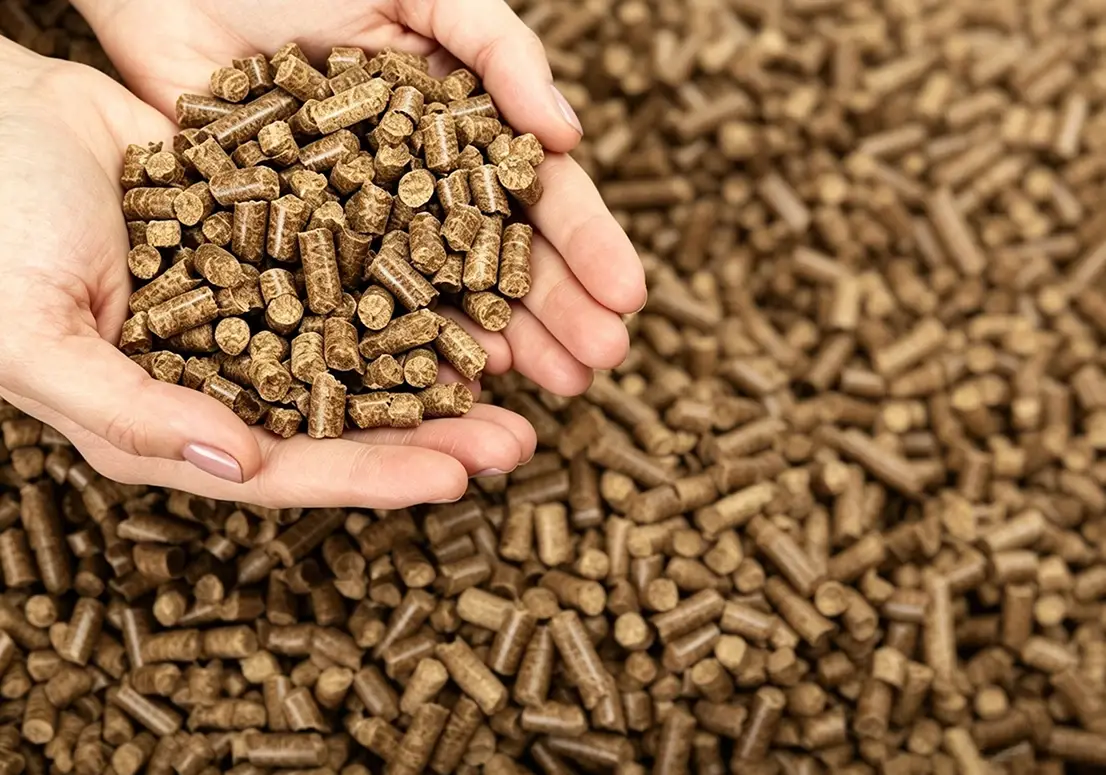
High-quality pellets, however, open access to premium markets such as:
- European heating fuel distributors
- Industrial boiler operators
- Biomass power plants
- Animal bedding suppliers
This is why equipment selection is not just a technical decision but a commercial strategy.
A reliable pellet mill ensures consistent output quality, which directly affects customer retention and pricing power.
Integrated Plant Thinking vs Single Machine Investment
Modern biomass production is no longer centered around individual machines. Instead, it focuses on integrated systems.
A complete production line typically includes:
- Crushing system
- Drying system
- Pelletizing system
- Cooling system
- Screening system
- Packaging system
This integration improves workflow efficiency and reduces human error.
Companies like Richi manufacture specialize in designing such integrated systems, helping clients build complete production ecosystems rather than isolated machines.
In many cases, a fully optimized pellet plant performs significantly better than disconnected equipment setups, even if the individual machines are high quality.
Market Reality: Competition Is Increasing
As biomass energy becomes more popular, competition is intensifying.
Producers are no longer competing locally—they are competing globally.
This means:
- Higher quality expectations
- Lower tolerance for inconsistency
- Greater pressure on pricing
- Faster delivery requirements
To remain competitive, producers must optimize every part of their operation.
Many operators searching for reliable equipment start by reviewing options like pellet machine for sale, comparing performance, energy efficiency, and long-term maintenance costs before making investment decisions.
Knowledge and Industry Learning Matter More Than Ever
Technology alone is not enough. Operators must also understand process optimization, raw material behavior, and market trends.
Many industry professionals rely on technical discussions and project case studies to improve decision-making.
For example, platforms such as blog here provide practical insights into biomass processing challenges, helping operators avoid common mistakes and improve system performance.
Continuous learning is now a key factor in biomass business success.
Future Outlook of Biomass Pellet Industry
The global biomass sector is expected to continue expanding due to:
- Renewable energy policies
- Carbon reduction targets
- Industrial fuel substitution
- Agricultural waste utilization programs
As demand increases, equipment efficiency will become even more important.
Future pellet systems will likely focus on:
- Higher automation
- AI-based control systems
- Multi-feedstock adaptability
- Lower energy consumption
This evolution will reshape how biomass plants are designed and operated.
Conclusion
Modern biomass pellet production is no longer a simple mechanical process. It is a complex industrial system that combines engineering design, market strategy, and operational intelligence.
Success depends on selecting the right technology, optimizing production scale, and maintaining consistent product quality.
As the industry grows, only those who combine technical efficiency with smart investment decisions will remain competitive in the global market.
Related Post:https://pelletizerequipment.com/biomass-pellet-machine/