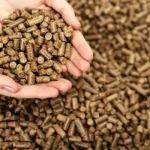


Chicken manure is a common agricultural waste material that can be processed into organic fertilizer pellets. Pelletizing can make loose manure easier to handle, store, transport, and apply.
However, chicken manure normally requires proper moisture control and preparation before it can enter the pelletizing stage.
When evaluating a chicken manure pellet machine for sale, buyers should therefore consider the complete production process rather than focusing only on the main pelletizing equipment.
Raw Material Characteristics
Fresh chicken manure can contain high moisture and may also contain bedding materials, feathers, feed residues, and other impurities.
The actual composition depends on the poultry farm, manure collection method, and storage conditions.
Before equipment selection, the material should be tested for moisture content and particle characteristics.
This information helps determine whether drying, crushing, screening, or other preparation stages are required.
Drying and Moisture Control
Moisture is one of the most important factors in chicken manure pellet production.
Fresh manure is generally too wet for direct pelletizing. A drying system can reduce excess moisture and prepare the material for further processing.
A rotary dryer is commonly used when continuous moisture reduction is required.
The required dryer capacity depends on the initial moisture content, target moisture, processing capacity, and available heat source.
If the manure has already been partially dried, the drying section can potentially be smaller.
Crushing and Mixing
After drying, chicken manure may need to be crushed to break up compacted material and create a more uniform feedstock.
A crusher can improve material consistency before the pelletizing stage.
If the final fertilizer formulation contains other organic materials, such as crop residues or composted biomass, a mixing system can combine the ingredients according to the desired formulation.
This makes the production process more flexible when the plant produces different fertilizer products.
Pelletizing Process
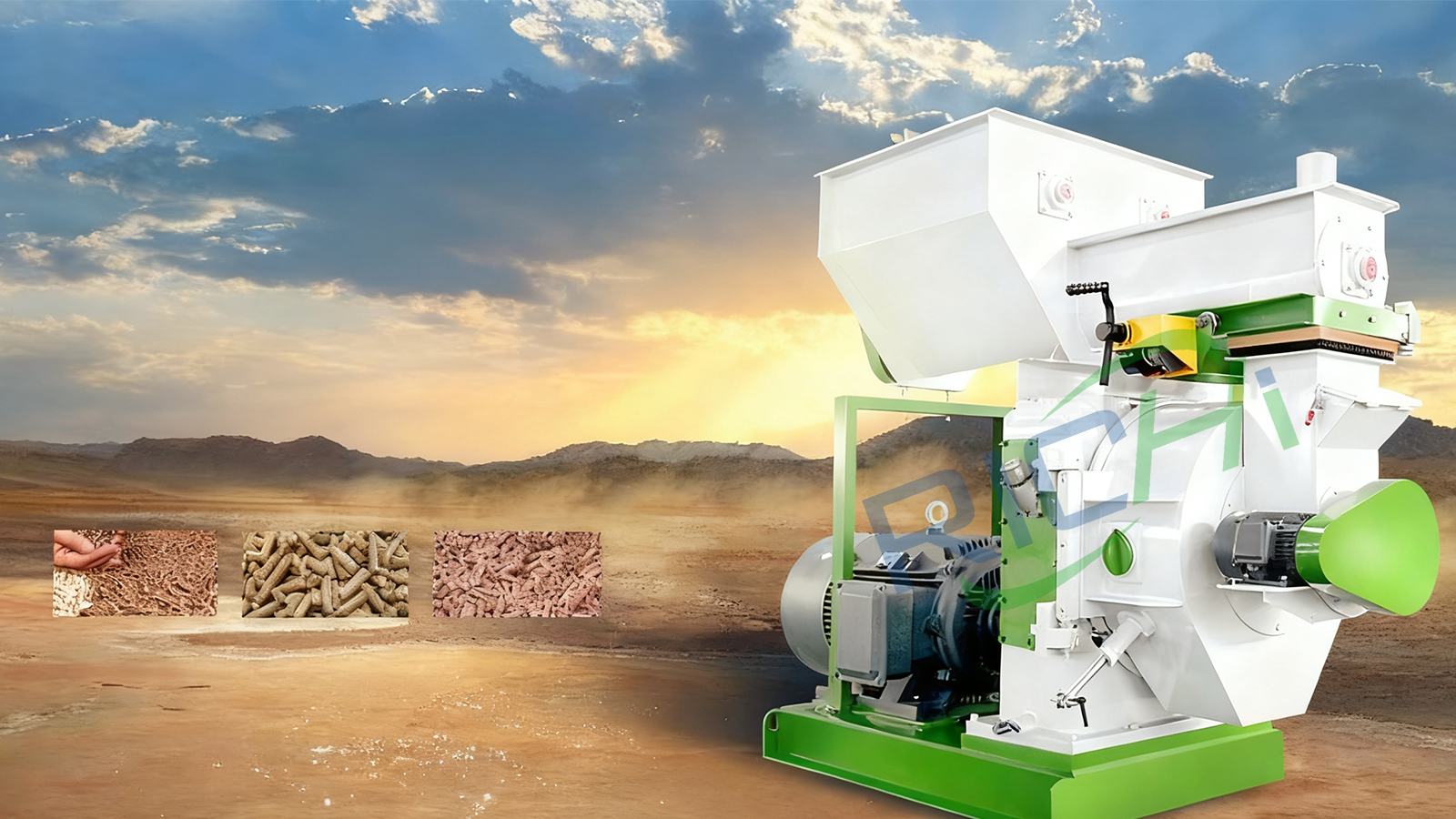
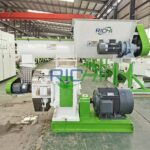
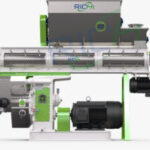
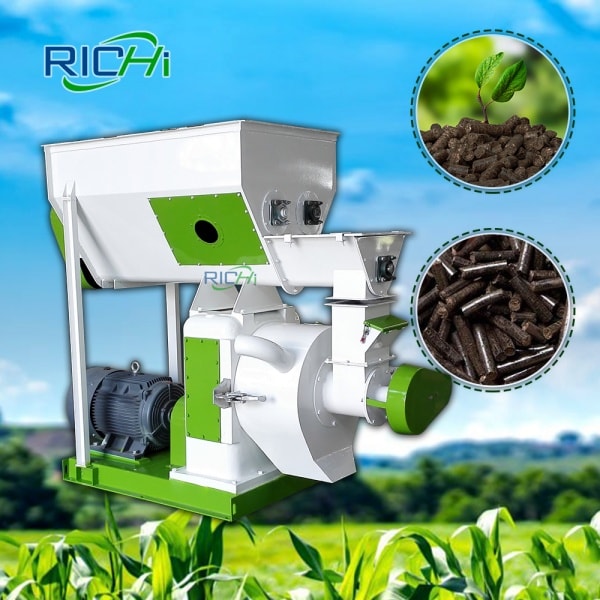
The prepared material is then fed into the pellet mill.
Inside the machine, rollers compress the material through a die, producing cylindrical fertilizer pellets.
Pellet diameter can be adjusted by selecting a suitable die.
The actual production capacity depends on moisture, particle size, formulation, pellet diameter, and equipment configuration.
A suitable pellet machine should therefore be selected according to the complete raw material and production requirements rather than nominal capacity alone.
Cooling and Screening
Fresh fertilizer pellets can retain heat and moisture after pelletizing.
A cooler can reduce pellet temperature before storage, while screening removes fines and undersized pellets.
The screening stage helps improve the consistency of the finished fertilizer.
Depending on the production configuration, suitable fines can potentially be returned to the pelletizing process.
For larger production systems, continuous conveying between these stages helps maintain stable material flow.
Typical Equipment Configuration
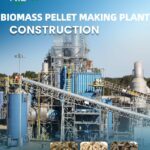
A chicken manure fertilizer pellet production line may include:
- Raw material receiving system
- Cleaning or screening equipment when necessary
- Crusher
- Dryer
- Mixer
- Pellet mill
- Cooler
- Vibrating screen
- Conveyors
- Storage or packing system
The actual equipment list depends on the condition of the manure and the required fertilizer formulation.
A farm processing partially dried manure may require fewer machines than a large poultry operation processing fresh manure continuously.
Organic Fertilizer Applications
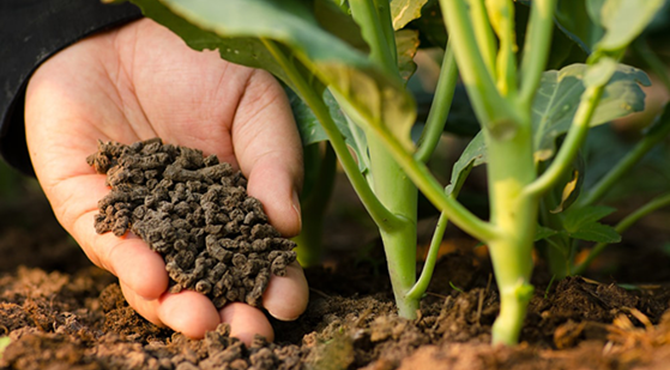
Processed chicken manure pellets can be used as an organic fertilizer in agricultural production.
Compared with loose manure, pellets have a more uniform shape and are easier to package and transport.
The final fertilizer characteristics depend on the original manure, additional ingredients, moisture control, and processing conditions.
Before commercial production, the finished product should be tested to confirm that it meets the intended agricultural and regulatory requirements.
Production Capacity and Automation
Capacity should be selected according to the amount of manure available every day.
A small poultry farm may need only a relatively low-capacity system, while a large poultry operation can generate enough manure to justify continuous commercial production.
Automation can also be adjusted according to the project size.
Basic systems may use manual feeding and packaging, while larger plants can use automatic feeding, centralized control, mechanical conveying, and automatic packing.
What to Check Before Buying
When comparing a cow dung pellet machine for sale, buyers should check more than the machine price.
Important factors include:
- Raw material moisture
- Daily manure availability
- Production capacity
- Pellet diameter
- Dryer capacity
- Crusher configuration
- Mixing requirements
- Cooling system
- Screening system
- Automation level
- Installation and spare parts
A complete equipment list makes it easier to compare different supplier quotations.
Planning the Complete Project
Chicken manure pellet production is not simply a pelletizing process. Moisture control, crushing, mixing, pelletizing, cooling, and screening all affect the final product.
For a new project, the equipment should be designed around the actual manure characteristics and production target.
Before requesting a quotation, buyers should prepare information about daily manure output, moisture content, desired pellet size, additional fertilizer ingredients, and expected production capacity.
This allows the production system to be configured more accurately and helps avoid unnecessary equipment investment.
For more information about organic fertilizer pellet production and related processing equipment, read more before planning the complete project.
Related Post: https://pelletizerequipment.com/chicken-manure-pellet-production-line/