


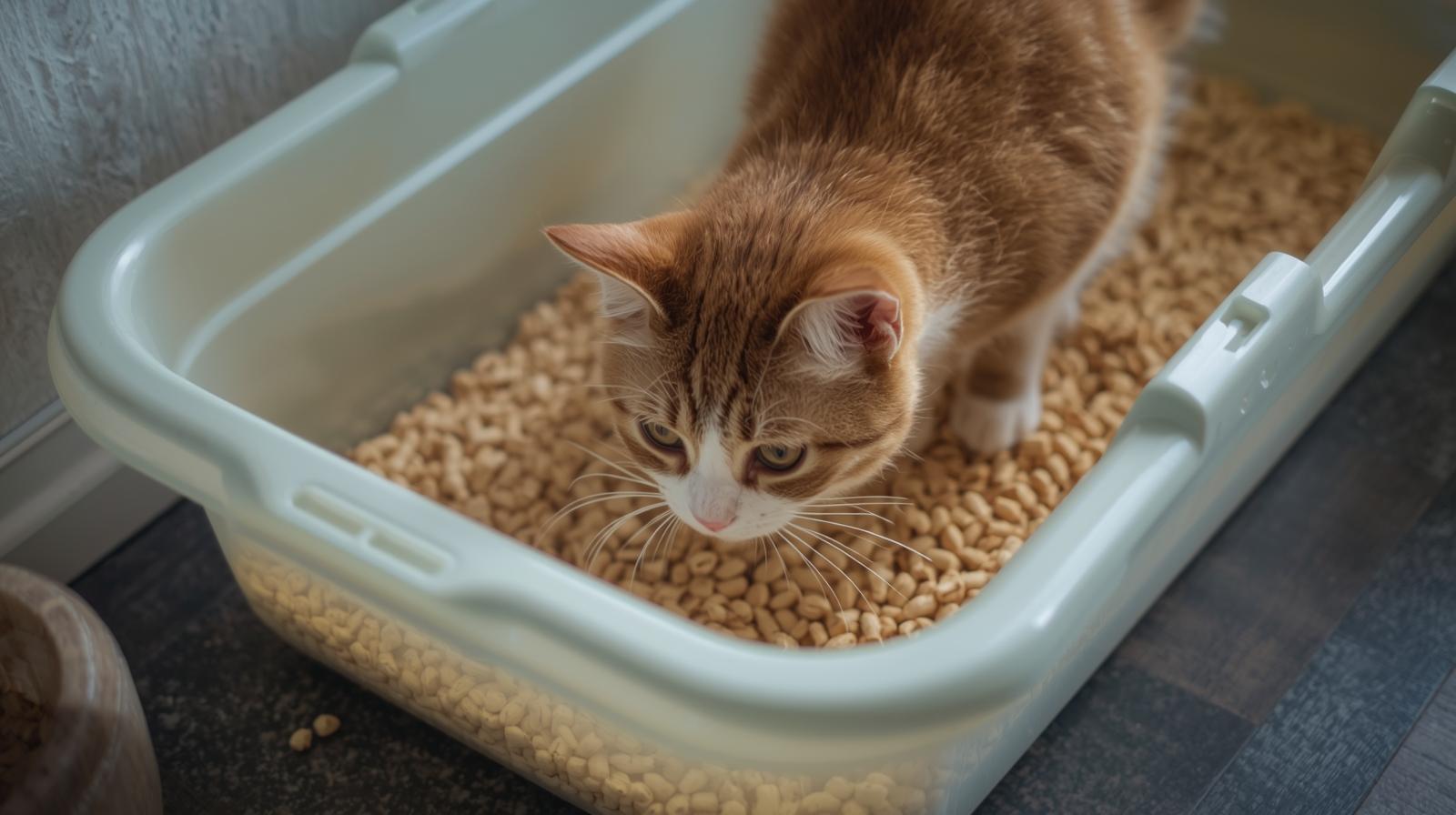
As demand for cat litter continues to grow, manufacturers are under increasing pressure to produce high-quality products faster, more consistently, and at a lower cost. Whether a factory produces bentonite cat litter, tofu cat litter, wood pellets, corn-based litter, or other plant-based products, production efficiency has become a key factor in determining profitability and competitiveness.
Improving cat litter production efficiency does not simply mean increasing the speed of a single machine. A factory must optimize the entire manufacturing process, from raw material receiving and pretreatment to pelletizing, drying, cooling, screening, coating, and packaging. Equipment capacity, process design, energy consumption, material handling, automation, maintenance, and quality control all influence overall performance.
A professionally designed one stop cat litter production plant can integrate these processes into a coordinated system, helping manufacturers reduce unnecessary handling, improve equipment utilization, stabilize product quality, and simplify factory management.
This article explains practical ways to improve cat litter production efficiency and how an integrated production plant can help manufacturers build a more productive and cost-effective operation.
1. What Does Cat Litter Production Efficiency Mean?
Cat litter production efficiency refers to how effectively a factory converts raw materials into qualified finished products while using the least practical amount of:
- Time
- Energy
- Labor
- Raw materials
- Factory space
- Maintenance resources
A highly efficient factory should achieve several objectives simultaneously:
- High production capacity
- Stable product quality
- Low material waste
- Controlled energy consumption
- Low downtime
- Efficient labor utilization
- Reliable packaging
- Safe and clean operation
Simply increasing output while causing more defective products or excessive energy consumption does not represent genuine efficiency.
2. Start With Raw Material Optimization
Raw materials have a major influence on production efficiency.
Different cat litter materials require different processing technologies.
Common raw materials include:
- Bentonite
- Sawdust
- Wood fiber
- Soybean residue
- Corn fiber
- Wheat straw
- Bamboo fiber
- Cassava residue
- Rice husk
- Recycled paper
The first step is to understand the characteristics of the material.
Important parameters include:
- Moisture
- Particle size
- Bulk density
- Fiber structure
- Absorption
- Cleanliness
- Pelletizing performance
Using stable and suitable raw materials reduces fluctuations throughout the production process.
3. Control Raw Material Moisture
Moisture is one of the most important variables in cat litter production.
For biomass-based litter, raw materials can arrive at the factory with significantly different moisture levels.
Excessive moisture can increase:
- Drying time
- Energy consumption
- Transportation costs
- Storage problems
Insufficient moisture can negatively affect pellet formation.
A factory should therefore establish a raw material moisture-control procedure.
Moisture meters can be used to check incoming materials before they enter production.
4. Improve Raw Material Storage
Poor storage can reduce production efficiency before processing even begins.
Biomass materials should be protected against:
- Rain
- Excess humidity
- Contamination
- Excessive heat
- Pest damage
A well-organized storage area should allow first-in, first-out material management.
Storage bins and automated conveying systems can also reduce manual handling.
For mineral materials such as bentonite, proper storage helps prevent moisture absorption and contamination.
5. Optimize Cleaning
Cleaning is necessary for many raw materials.
Foreign materials such as stones, metal, plastic, and soil can damage equipment and reduce finished-product quality.
A cleaning system may include:
- Vibrating screen
- Rotary screen
- Magnetic separator
- Air separator
Efficient cleaning protects crushers, grinders, pellet mills, and other downstream machinery.
The cleaning process should remove contaminants without unnecessarily losing useful raw materials.
6. Optimize Crushing
Large biomass materials may need to be crushed before grinding.
For example:
- Wood chips
- Bamboo pieces
- Straw
- Corn stalks
A properly selected crusher reduces material size efficiently.
However, crushing equipment should not be oversized or operated unnecessarily.
The goal is to prepare the raw material for grinding with minimum energy consumption.
7. Improve Grinding Efficiency
Grinding is another major energy-consuming process in biomass cat litter production.
A hammer mill can reduce raw materials to a suitable particle size.
The target size should be based on actual pelletizing requirements.
Grinding material too finely can:
- Increase electricity consumption
- Reduce production capacity
- Generate more dust
- Increase wear
Therefore, manufacturers should identify the optimum particle size rather than simply choosing the finest possible grinding setting.
8. Select the Right Pelletizing Technology
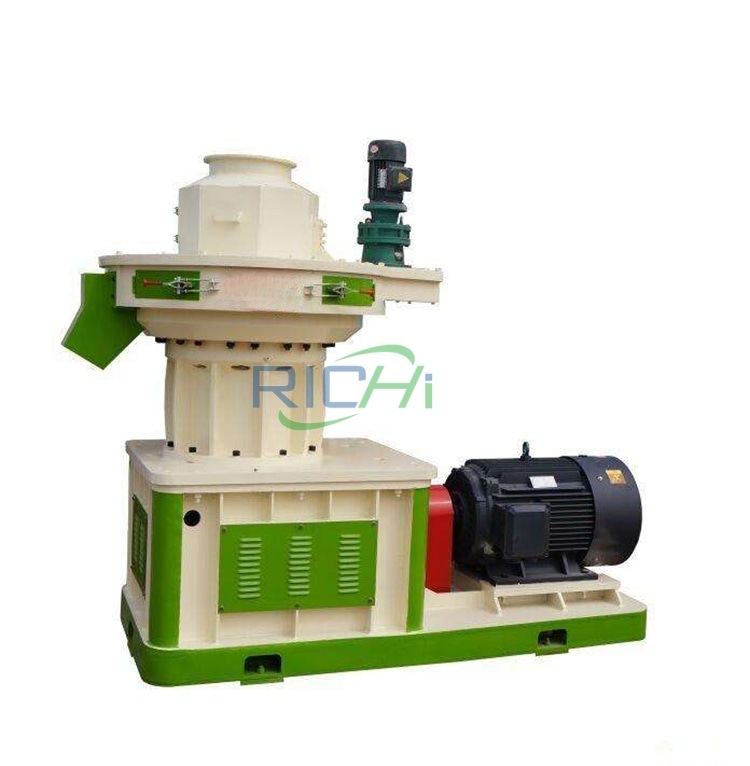
Pelletizing is one of the most important stages in many plant-based cat litter production lines.
A pellet mill compresses prepared material through a die.
Its efficiency depends on:
- Raw material
- Moisture
- Particle size
- Formula
- Die specifications
- Roller condition
- Feeding stability
The pellet mill should be selected according to the actual material and desired production capacity.
A machine that is too small can become a bottleneck.
A machine that is significantly oversized can increase investment and operating costs.
9. Maintain Stable Feeding
Even a high-performance pellet mill cannot operate efficiently if the feeding system is unstable.
The feeder should provide a continuous and uniform supply of material.
Uneven feeding can cause:
- Production fluctuations
- Pellet quality variation
- Increased energy consumption
- Equipment overload
A forced feeder or controlled feeding system can help maintain stable material flow.
10. Control Pellet Moisture
Moisture should be controlled before pelletizing.
If the material is too dry, pellet formation can become difficult.
If it is too wet, the pellets may become soft and require excessive drying.
A moisture-conditioning system can add water uniformly when necessary.
For large factories, automated moisture control can improve consistency and reduce operator dependence.
11. Improve Mixing Efficiency
Some cat litter products require multiple ingredients.
For example, a tofu or plant-based clumping litter formula may contain:
- Main fiber
- Starch
- Binder
- Odor-control additives
- Activated carbon
All ingredients must be evenly distributed.
An efficient mixer should provide:
- Uniform mixing
- Short mixing time
- Low residual material
- Stable operation
Poor mixing can cause inconsistent product performance and increase the amount of rejected material.
12. Improve Dryer Efficiency
Drying can be one of the largest energy consumers in a biomass cat litter factory.
Improving dryer efficiency can significantly reduce production costs.
Important factors include:
- Initial moisture
- Final moisture
- Air temperature
- Airflow
- Residence time
- Feed rate
- Heat recovery
Manufacturers should avoid excessive drying.
The objective is not to remove as much moisture as possible, but to achieve the appropriate final moisture level efficiently.
13. Use Appropriate Drying Technology
Different materials require different drying strategies.
Sawdust may require relatively straightforward drying.
Wet soybean residue may require greater drying capacity.
The dryer should therefore be selected based on:
- Material type
- Moisture range
- Production capacity
- Required final moisture
- Available heat source
A properly sized drying system prevents bottlenecks and reduces unnecessary energy consumption.
14. Improve Heat Utilization
Heat efficiency can be improved through proper system design.
Manufacturers can consider:
- Insulated ducts
- Proper dryer sealing
- Efficient burners
- Heat recovery
- Optimized airflow
- Automatic temperature control
Reducing heat losses can lower fuel consumption.
For high-capacity factories, even small improvements in thermal efficiency can result in significant annual savings.
15. Optimize Cooling
After drying, cat litter pellets should be cooled before screening and packaging.
An appropriately sized cooler can reduce:
- Product temperature
- Condensation risk
- Packaging problems
- Storage instability
The cooler should be matched to the output of the pelletizing and drying systems.
If the cooling stage is too small, it can become a bottleneck.
16. Improve Screening Efficiency
Screening determines the particle-size consistency of finished litter.
The screening system separates:
- Qualified pellets
- Fine powder
- Broken pellets
- Oversized particles
An efficient screening system can reduce the amount of fines entering the final package.
Suitable fines may be recycled when appropriate.
This improves raw-material utilization and reduces waste.
17. Reduce Dust Generation
Dust reduces both product quality and production efficiency.
Dust can be generated during:
- Crushing
- Grinding
- Pelletizing
- Drying
- Cooling
- Screening
- Conveying
- Packaging
A professional dust-control system may include:
- Cyclones
- Baghouse filters
- Exhaust fans
- Ductwork
Reducing dust can improve working conditions, decrease material losses, and reduce cleaning requirements.
18. Optimize Material Conveying
Material handling can consume significant labor and time in poorly designed factories.
Conveyors should be arranged to provide a logical flow:
Raw Material → Processing → Pelletizing → Finishing → Packaging
Common conveying equipment includes:
- Belt conveyors
- Screw conveyors
- Bucket elevators
- Pneumatic conveying systems
The best system depends on material characteristics and factory layout.
Reducing unnecessary transfers can improve efficiency and reduce product breakage.
19. Reduce Material Transfer Distance
A poorly planned factory may require materials to travel long distances between machines.
This creates:
- More energy consumption
- More equipment
- More labor
- More material loss
- Greater maintenance requirements
A properly designed production layout minimizes unnecessary movement.
The equipment should follow the actual production sequence as closely as practical.
20. Automate Batching
Manual batching can result in:
- Formula errors
- Labor requirements
- Inconsistent product quality
- Slow production
Automatic batching systems can precisely measure each ingredient.
A computerized batching system can store different formulas and automatically control ingredient quantities.
This is particularly useful for factories producing multiple cat litter formulas.
21. Use PLC Automation
PLC control can coordinate multiple production stages.
A centralized control system can monitor:
- Feed rates
- Motor operation
- Dryer temperature
- Moisture
- Conveyor status
- Alarm conditions
Automation can reduce operator workload and improve production consistency.
It also makes it easier to identify equipment problems.
22. Automate Packaging
Packaging can become a bottleneck if it relies heavily on manual labor.
An automatic packaging system can:
- Weigh the product.
- Fill the bag.
- Seal the package.
- Print batch information.
- Convey finished products.
Automation improves:
- Weighing accuracy
- Packaging speed
- Labor efficiency
- Product presentation
Palletizing can also be automated for high-volume factories.
23. Improve Product Formula
Production efficiency is not only about machinery.
An inefficient formula can create:
- Excessive dust
- Poor pellet durability
- High binder consumption
- Longer drying times
- Higher production costs
Manufacturers should continuously evaluate formulas for:
- Absorption
- Clumping
- Durability
- Moisture
- Density
- Cost
A well-optimized formula can improve both product performance and manufacturing efficiency.
24. Reduce Binder Consumption
For plant-based clumping litter, binders may be required.
However, excessive binder can:
- Increase costs
- Affect absorption
- Change pellet characteristics
- Increase drying requirements
Manufacturers should determine the minimum practical binder level needed to achieve the desired performance.
Pilot testing is recommended before large-scale implementation.
25. Recycle Suitable Fines
Screening produces fine particles and broken pellets.
Where technically appropriate, some of this material can be returned to the production process.
Recycling can:
- Reduce material waste
- Improve raw-material utilization
- Lower production costs
However, recycled material should be controlled carefully to avoid negatively affecting product quality.
26. Reduce Equipment Downtime
Equipment downtime directly reduces production capacity.
Common causes include:
- Wear
- Poor lubrication
- Overloading
- Blockages
- Electrical problems
- Incorrect operation
Preventive maintenance should therefore be part of daily factory management.
27. Implement Preventive Maintenance
A maintenance program should include:
Daily Checks
- Motor condition
- Abnormal noise
- Temperature
- Material flow
Weekly Checks
- Lubrication
- Fasteners
- Screens
- Conveyors
Periodic Checks
- Pellet mill rollers
- Dies
- Bearings
- Dryer components
- Electrical systems
Regular maintenance helps prevent major failures.
28. Keep Critical Spare Parts
A factory should keep critical spare parts available.
Typical parts include:
- Pellet mill dies
- Rollers
- Bearings
- Screens
- Belts
- Seals
- Motors or electrical components
Having spare parts on-site can shorten downtime when replacement is required.
29. Improve Worker Training
Even an automated production line requires skilled operators.
Workers should understand:
- Equipment operation
- Production parameters
- Safety procedures
- Emergency shutdown
- Basic maintenance
- Quality-control procedures
Well-trained operators can identify abnormalities before they become serious failures.
30. Use Production Data
Modern factories can monitor production data such as:
- Hourly output
- Electricity consumption
- Dryer temperature
- Raw material consumption
- Product rejection rate
- Machine downtime
Analyzing these indicators can identify inefficiencies.
For example, if energy consumption increases while production remains unchanged, the factory can investigate dryer performance or equipment wear.
31. Reduce Energy Consumption
Energy costs can have a major influence on cat litter production economics.
Manufacturers can reduce energy consumption by:
- Using efficient motors
- Optimizing grinding
- Improving dryer insulation
- Recovering heat
- Avoiding over-drying
- Reducing unnecessary material conveying
- Maintaining equipment properly
The biggest opportunities often occur in grinding and drying.
32. Balance the Production Line
One of the most important principles of production efficiency is line balancing.
Suppose a factory has:
- Grinding capacity: 5 T/H
- Pelletizing capacity: 3 T/H
- Drying capacity: 2 T/H
The factory cannot realistically produce 5 T/H of finished product because the dryer becomes the bottleneck.
Therefore, every major processing section should be properly matched.
A production line should be designed around the capacity of the entire system, not just the main machine.
https://pelletisingmachine.com/cat-litter-production-line
33. Design the Factory Layout Carefully
The factory layout should consider:
- Raw material flow
- Finished-product flow
- Equipment maintenance
- Worker access
- Dust control
- Fire safety
- Storage
- Packaging
A logical layout can reduce transportation distances and improve safety.
Raw materials should ideally enter one side of the process and finished products exit another.
34. Why Choose a One Stop Cat Litter Production Plant?
A one stop cat litter production plant integrates multiple services and production stages into a single project.
Instead of purchasing individual machines from different suppliers, manufacturers can obtain an integrated solution covering:
- Production process design
- Equipment selection
- Factory layout
- Equipment manufacturing
- Transportation
- Installation
- Commissioning
- Operator training
- After-sales service
This approach can reduce coordination problems between different equipment suppliers.
35. What Does a One Stop Cat Litter Production Plant Include?
Depending on the project, a one-stop plant can include:
Raw Material Section
Receiving, cleaning, crushing, grinding, and storage.
Conditioning Section
Drying, batching, mixing, and moisture adjustment.
Forming Section
Pelletizing or granulation.
Finishing Section
Drying, cooling, screening, and coating.
Packaging Section
Weighing, filling, sealing, coding, and palletizing.
Environmental Section
Dust collection and exhaust treatment.
Control Section
PLC automation and electrical control.
The actual configuration should be customized according to raw materials and production capacity.
36. One-Stop Engineering Reduces Coordination Problems
When machines are purchased from multiple suppliers, manufacturers may face compatibility problems.
For example:
- Different conveyor capacities
- Incompatible control systems
- Incorrect machine dimensions
- Different electrical requirements
- Poorly matched material flow
A one-stop engineering approach allows the entire production system to be designed together.
This can simplify installation and commissioning.
37. RICHI One Stop Cat Litter Production Plant
RICHI Machinery Manufacture provides customized turnkey solutions for customers planning to build a one stop cat litter production plant.
Depending on the product type, the production process can be designed for:
- Bentonite cat litter
- Tofu cat litter
- Wood cat litter
- Biomass cat litter
- Corn-based cat litter
- Other suitable plant-based litter
A typical plant may integrate:
Raw Material Receiving → Cleaning → Crushing → Grinding → Drying → Batching → Mixing → Moisture Adjustment → Pelletizing/Granulation → Drying → Cooling → Screening → Coating → Packaging
RICHI can provide services covering customized production line design, equipment manufacturing, overseas transportation and customs clearance, on-site installation and commissioning, operator training, spare parts supply, and long-term after-sales technical support.
The system can be designed according to:
- Raw material characteristics
- Production capacity
- Product size
- Moisture requirements
- Clumping performance
- Packaging format
- Factory dimensions
- Automation level
This allows the production line to be engineered as an integrated project rather than a collection of independent machines.
38. Improve Quality While Increasing Output
Increasing output should never come at the expense of product quality.
A good production system should maintain:
- Consistent particle size
- Stable moisture
- Low dust
- Strong pellet durability
- Reliable absorption
- Stable clumping
- Effective odor control
Quality-control systems should operate alongside production.
If the rejection rate increases as output increases, the production process needs further optimization.
39. Establish Standard Operating Procedures
Standard operating procedures can improve consistency.
SOPs should cover:
- Raw material receiving
- Equipment startup
- Grinding
- Mixing
- Pelletizing
- Drying
- Cooling
- Screening
- Packaging
- Equipment shutdown
- Emergency procedures
Clear procedures help new operators learn faster and reduce operational errors.
40. Monitor Key Performance Indicators
A cat litter factory can monitor several important KPIs.
Production Capacity
Tons of finished product per hour.
Energy Consumption
Electricity or fuel consumed per ton.
Material Yield
Percentage of qualified finished product.
Downtime
Hours lost because of equipment problems.
Rejection Rate
Percentage of products failing quality standards.
Labor Productivity
Finished-product output per worker.
Monitoring these indicators provides a practical way to identify areas for improvement.
41. How to Improve Production Efficiency Step by Step
A manufacturer can follow this improvement process:
Step 1: Analyze Current Production
Identify bottlenecks.
Step 2: Test Raw Materials
Check moisture and physical properties.
Step 3: Optimize Grinding
Find the appropriate particle size.
Step 4: Improve Moisture Control
Stabilize pelletizing and drying.
Step 5: Balance Equipment Capacity
Remove production bottlenecks.
Step 6: Optimize Dryer Operation
Reduce unnecessary energy consumption.
Step 7: Improve Screening
Reduce fines and product losses.
Step 8: Automate Material Handling
Reduce manual work.
Step 9: Improve Packaging
Increase final-stage capacity.
Step 10: Establish Preventive Maintenance
Reduce downtime.
42. The Role of Technology in Future Cat Litter Production
Future cat litter factories are likely to become more automated.
Potential technologies include:
- Automated batching
- PLC control
- Digital production monitoring
- Automatic moisture control
- Automated packaging
- Automatic palletizing
- Energy monitoring
- Predictive maintenance
Automation can allow manufacturers to produce more consistently while reducing dependence on manual operations.
Conclusion
Improving cat litter production efficiency requires a comprehensive approach. It is not enough to install a higher-capacity pellet mill or increase the speed of one machine. The entire manufacturing process must be optimized.
The key areas include:
- Selecting stable raw materials
- Controlling moisture
- Optimizing crushing and grinding
- Maintaining stable feeding
- Improving mixing
- Optimizing pelletizing
- Reducing drying energy consumption
- Improving cooling and screening
- Controlling dust
- Automating batching and packaging
- Reducing downtime
- Training operators
- Monitoring production data
- Balancing the entire production line
For manufacturers planning a new factory, a one stop cat litter production plant can provide an integrated approach to production efficiency. By coordinating raw material preparation, pelletizing, drying, cooling, screening, coating, packaging, automation, and environmental systems, the factory can reduce unnecessary material handling and improve overall equipment utilization.
RICHI can provide customized one-stop and turnkey cat litter production solutions according to raw materials, product specifications, production capacity, factory layout, and automation requirements. The service can cover customized process design, equipment manufacturing, transportation and customs clearance, installation and commissioning, operator training, spare parts, and long-term technical support.
Ultimately, the most efficient cat litter factory is not necessarily the one with the largest machines. It is the factory in which raw materials, equipment, process parameters, energy use, material flow, automation, maintenance, and quality control are carefully coordinated. By optimizing the complete production system, manufacturers can increase output, reduce production costs, maintain stable product quality, and build a more competitive cat litter manufacturing business.