



The Pet-Litter Market Is Changing
Cat litter used to be viewed almost entirely as a functional household product. Consumers needed something that absorbed moisture, controlled odor and was easy to clean. Today, purchasing decisions can be more complicated.
Pet owners are increasingly paying attention to material origin, dust, transport weight, packaging, environmental positioning and the overall experience of using a litter product.
This creates opportunities for manufacturers willing to develop products from renewable materials.
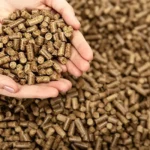
Wood-based litter is particularly interesting because it can be connected to an existing forestry or woodworking supply chain. Sawdust, wood particles and other clean residues can potentially become useful raw materials rather than remaining low-value by-products.
However, successful production is not simply about compressing sawdust into pellets.
A commercial product must be designed around the way consumers actually use cat litter.
That means manufacturers need to think about particle behavior, moisture, dust, packaging, raw-material quality and product positioning from the beginning.
Why Sawdust Is Different From Traditional Mineral Litter
Mineral-based litter and wood-based litter behave very differently.
Clay-based products are commonly valued for their familiar absorption and clumping characteristics, while wood-based products can be positioned around a lighter, plant-derived material concept.
This difference affects the production strategy.
Wood has a fibrous structure. Its density changes depending on species and particle size. The same batch of sawdust may behave differently depending on how it was produced and stored.
A furniture factory may generate very fine residues, while a sawmill may produce a mixture of small chips and sawdust.
Therefore, the manufacturer has to create a stable raw-material condition before focusing on the final shape.
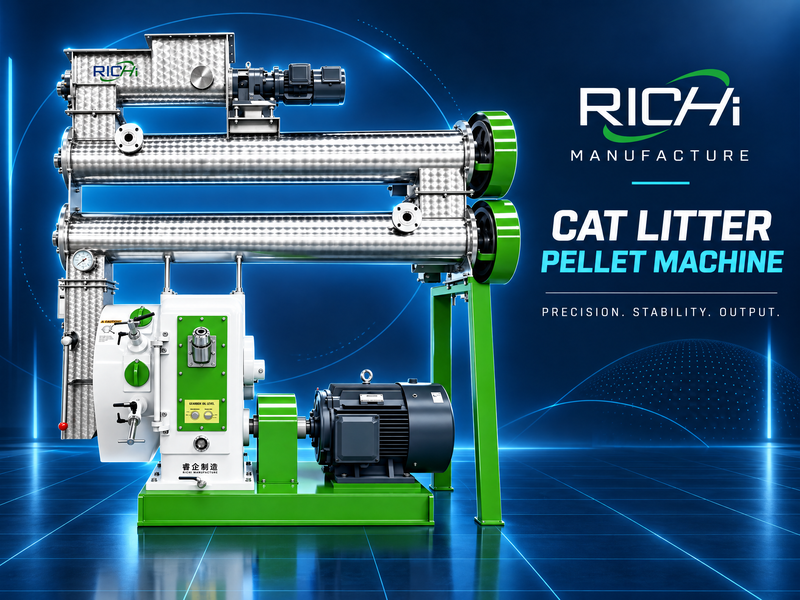
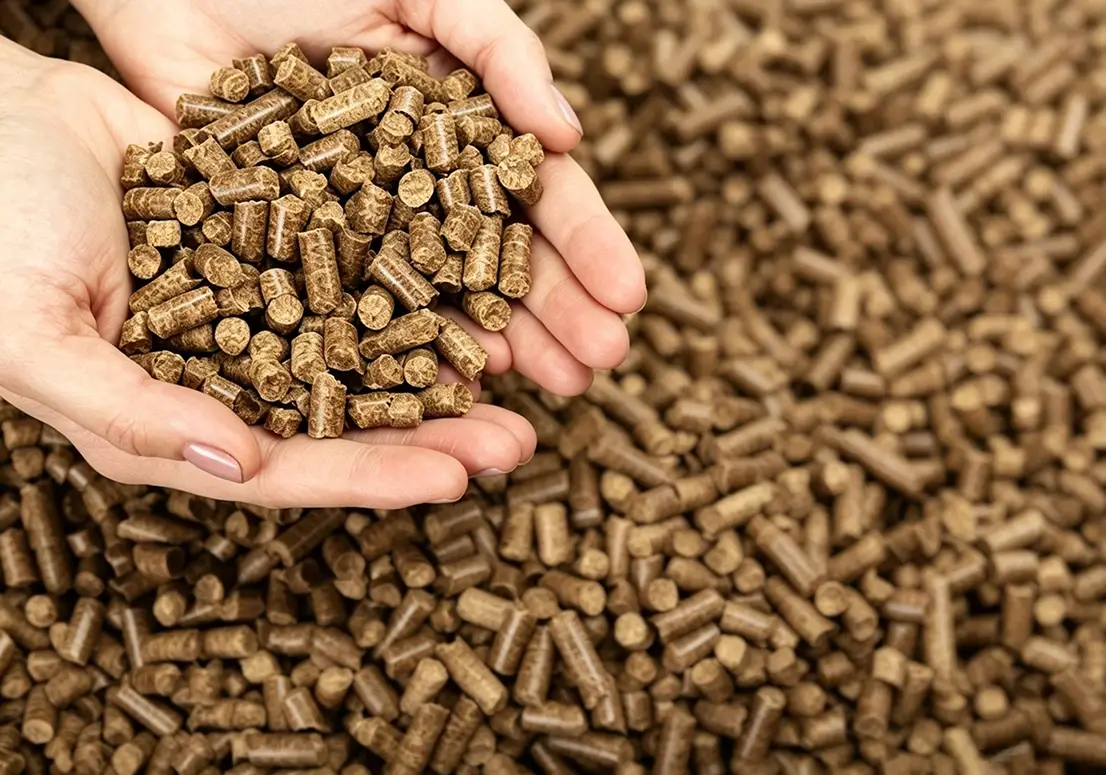
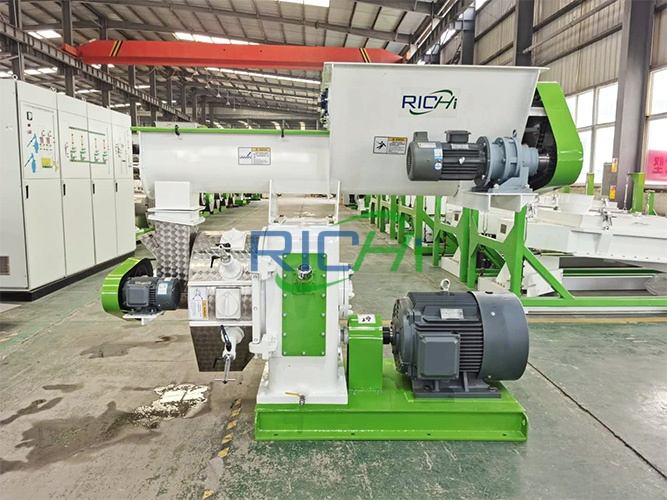
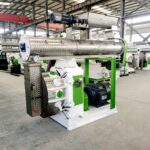
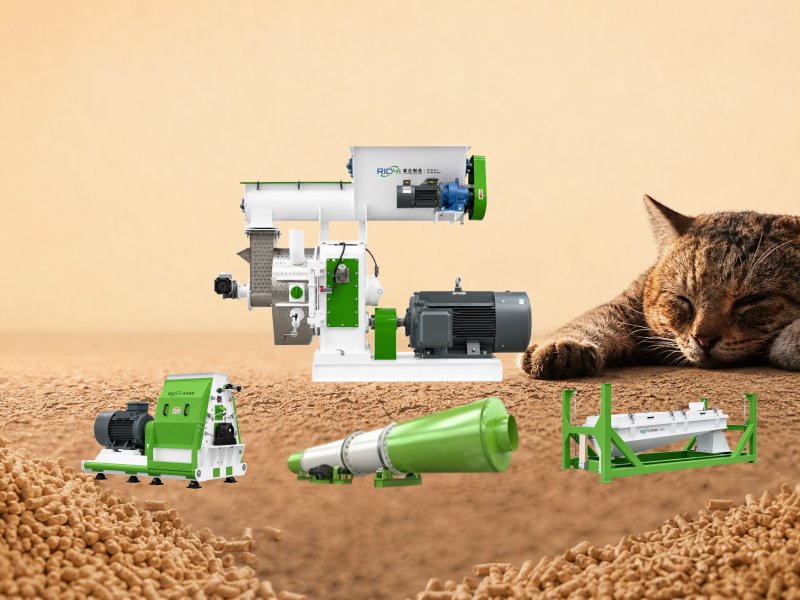
A well-planned Sawdust Cat Litter Production Equipment system should be considered as a product-development platform rather than simply a pellet production line.
Product Design Should Come Before Equipment Selection
A common mistake is to decide on equipment before deciding what kind of cat litter will be sold.
A better approach is to define the product first.
Questions worth answering include:
- Is the litter intended to be lightweight?
- Is low dust a major selling point?
- Is natural wood appearance desirable?
- Should the product have a certain particle size?
- Will fragrance be added?
- Will the product be sold in small retail bags or bulk packages?
- Is the target customer looking for biodegradable or plant-based materials?
These decisions can influence the processing route.
For example, a manufacturer focusing on fine, lightweight particles may have different requirements from a producer targeting a dense, long-lasting litter product.
The production system should therefore support the intended product rather than forcing the product to fit a machine specification.
Raw-Material Consistency Can Become a Competitive Advantage
Many companies think of sawdust as a single raw material.
In reality, “sawdust” can describe a wide range of materials.
Differences can come from:
Wood species
Softwood and hardwood residues may have different density, fiber characteristics and forming behavior.
Particle size
Fine sawdust can behave very differently from mixed sawdust containing larger chips.
Moisture
Storage and weather can change moisture significantly.
Contamination
Clean woodworking residues should be separated from materials that may contain paint, coatings, adhesives or other unwanted substances.
Storage time
Freshly generated material may behave differently from material that has been stored for weeks.
This is why a manufacturer should establish a raw-material specification before scaling up.
A consistent input creates a more predictable production environment.
What Is the Right Capacity for a New Manufacturer?
There is no universal “best” capacity.
A manufacturer should consider three numbers together:
Available raw material + realistic market demand + operating schedule.
A facility with limited raw-material supply does not benefit from installing a very large line.
Likewise, a company with established distribution channels may need more than a small pilot operation.
For businesses that want flexibility across multiple bedding or biomass products, an 0.2-10T/H animal bedding pellet machine for sale may represent a useful reference point when comparing scalable equipment configurations.
The important issue is not the upper capacity shown in a catalogue.
It is how the system performs at the capacity you will actually operate.
Cat Litter and Other Bedding Products Can Share Infrastructure
One interesting commercial strategy is to build a production system that can support more than one product category.
A company may begin with sawdust cat litter and later introduce:
- Wood animal bedding
- Small-animal bedding
- Horse bedding products
- Poultry bedding materials
- Biomass fuel products
This strategy can make the factory more flexible, especially when raw-material availability changes seasonally.
However, product switching should be considered during engineering design.
The factory may need suitable storage arrangements, cleaning procedures and adjustable production parameters.
The goal is not to produce every product imaginable.
It is to create useful flexibility around the materials and markets the company already understands.
Dust Is Part of the Product Experience
Dust control deserves special attention in the pet-litter industry.
Loose powder can appear at several stages:
- Raw-material milling
- Material transfer
- Forming
- Cooling
- Screening
- Packaging
- Transportation
A product can therefore leave the forming machine looking good and still generate too much dust by the time it reaches the customer.
Manufacturers should inspect the full handling chain.
Product strength, screening accuracy and the design of transfer points can all affect the amount of loose fines entering the final package.
Dust is therefore not just a factory housekeeping problem.
It is part of product quality.
Packaging Can Change How Customers Perceive the Product
A technically good litter product still needs effective packaging.
Wood-based litter may be sold as a natural, premium or environmentally conscious product, depending on the market.
That positioning needs to be reflected in the package.
Packaging decisions can include:
- Bag size
- Graphic style
- Product naming
- Material claims
- Usage instructions
- Storage information
- Dust-control messaging
- Absorption and odor-control information
The package also has a practical job: protecting the product from moisture during storage and transport.
A poorly sealed bag can undo part of the work done inside the production line.
How Manufacturers Can Avoid Commodity Competition
Producing another generic pellet is unlikely to create strong differentiation.
A stronger commercial strategy is to define a specific customer need.
For example, a product might focus on:
- Low-dust performance
- Lightweight handling
- Clean wood sourcing
- Rapid moisture absorption
- Long-lasting use
- Premium fragrance
- Minimal loose fines
- Natural visual appearance
Once a product is defined in this way, equipment selection becomes easier because every processing step has a clear purpose.
This is an important difference between “making pellets” and “manufacturing a pet product.”
The Role of Engineering Expertise
Equipment suppliers can provide more value when they understand the application rather than simply selling individual machines.
A company such as Richi Pellet Mill can be evaluated not only according to machine specifications but also according to how the proposed equipment configuration fits the raw material, product target and intended capacity.
That is especially important for new projects where the customer may not yet know exactly which combination of preparation, forming and finishing equipment is appropriate.
Testing Before Full Investment
A practical project does not need to rely entirely on theoretical calculations.
Material testing can answer important questions before the final installation:
Can the raw material be formed consistently?
How much moisture adjustment is required?
How much dust is generated?
What particle size works best?
How stable is the finished product?
What happens during storage and transport?
These tests provide much more useful information than simply comparing machine names online.
Manufacturers should treat the pilot stage as part of product development rather than as an unnecessary delay.
More useful technical discussion and background information can be found from this source for companies researching wood-based processing concepts.
The Opportunity Is Bigger Than a Single Machine
The most promising wood-based litter projects are built around a complete value chain:
Wood residue → material preparation → controlled forming → stable finishing → packaged pet product.
The machine matters, but so does the material strategy, quality control and commercial positioning.
For woodworking companies, this may create a way to move from selling low-value residues toward producing a branded consumer product.
For pet-product companies, it can provide an alternative raw-material route.
For biomass processors, it can create another application for clean wood resources.
Conclusion
Sawdust-based cat litter is not simply another pellet product.
It sits at the intersection of biomass processing, pet-product manufacturing and consumer demand.
Manufacturers that begin with the final customer experience—rather than starting with machine capacity—have a clearer path toward product differentiation.
The most important questions are not only how many tons can be produced per hour, but what kind of litter will be produced, who will buy it, how consistently it can be made and how the raw-material supply can support the business over time.