




Commercial feed manufacturing keeps expanding across emerging agricultural markets. Many new mill operators quickly realize that buying machinery is only one small piece of the whole business puzzle. Even identical equipment can deliver very different hourly output, pellet durability, and long‑term operating costs. Plant layout, raw material preparation, operator skill, spare‑part management, and service support all play large roles in real‑world production results. Understanding these practical factors helps investors avoid costly mistakes before breaking ground on new feed‑making facilities.
Raw material preparation stands out as the most frequently underestimated step for new feed mills. Grain, oilseed meals, forage, and agricultural by‑products each carry unique physical traits that shape every downstream processing stage. Moisture content tops the list of critical checks. When incoming raw materials hold too much water, finished pellets become soft, prone to mold, and may stick inside the ring die feed pelletizer. If moisture runs too low, friction rises sharply, wear parts degrade faster, and the percentage of fine powder in finished batches increases. Most standard poultry and livestock feed formulations target 12.5%‑13.5% final moisture for safe long‑term storage. Local climate also shifts material conditions; high‑humidity tropical regions demand extra drying capacity, while arid zones may need controlled steam addition during conditioning.
Fiber level and particle size after grinding create another major variable. Ruminant feed contains large volumes of straw or alfalfa, generating long fibrous fragments. Without adequate hammer mill performance, these long fibers will tangle within pelletizing chambers, reduce throughput, and increase motor load. For poultry diets, ultra‑fine grinding supports better animal digestion, yet over‑grinding wastes electricity and raises dust volume inside workshops. Every feed formula needs a defined target grind size before materials ever reach pelletizing equipment. Many first‑time investors skip material sampling and lab testing. They order production lines based purely on target tonnage numbers, only to discover later their local raw materials cannot hit rated machine capacity.
Conditioning performance directly connects raw‑material quality to final pellet quality. Steam conditioning heats and moisturizes powdered feed to gelatinize starch. Proper gelatinization improves pellet hardness, reduces fines, and boosts nutrient digestibility for farm animals. Multi‑layer conditioners hold materials longer under stable temperature, normally between 75°C and 85°C. Short conditioning residence time results in poorly formed pellets, no matter how good your pelletizing hardware might be. Operators must monitor steam pressure, condensate removal, and material flow rate day‑to‑day. Condensate trapped inside steam lines injects uncontrolled liquid water into feed batches, causing sudden quality swings that frustrate production teams.
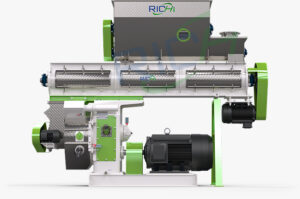
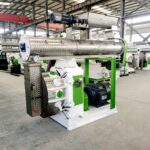
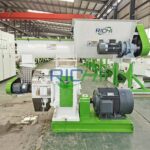
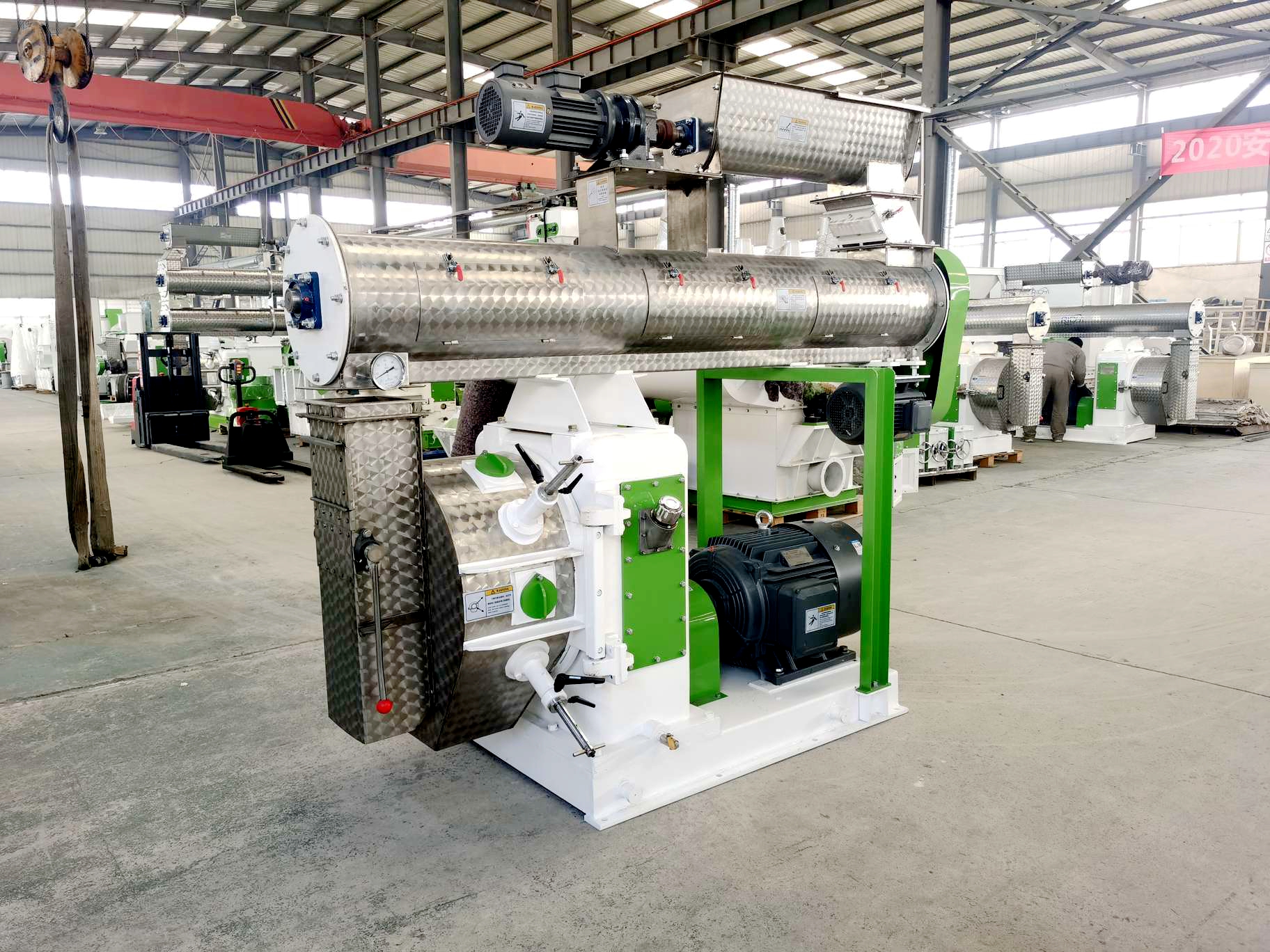
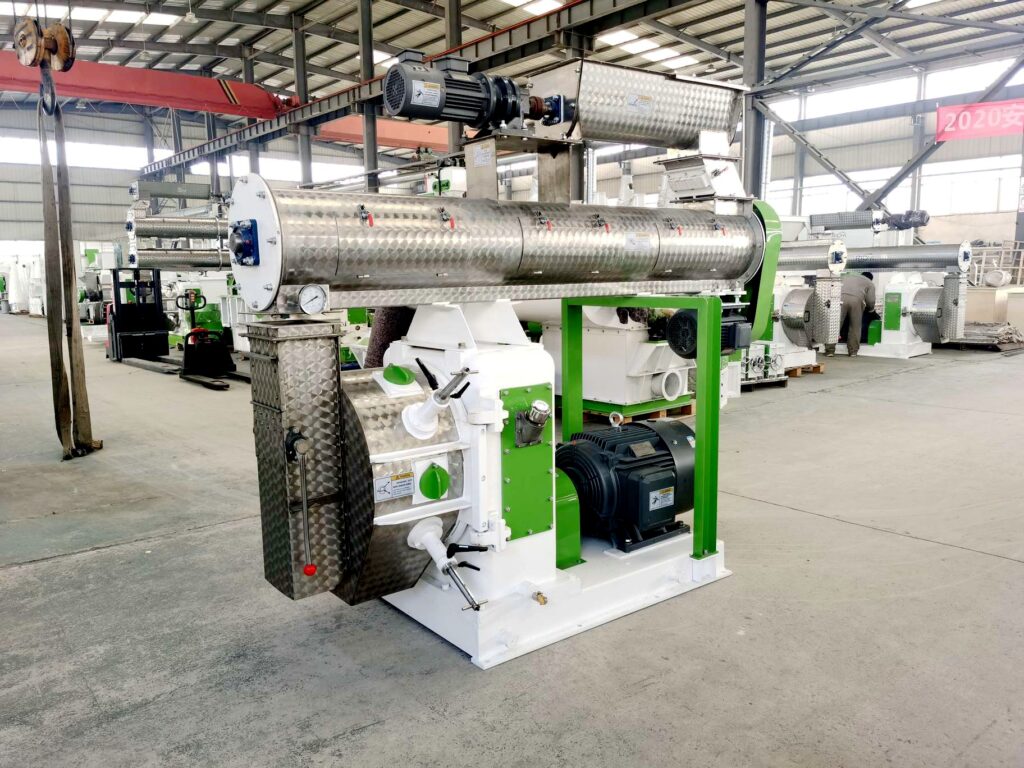
Choosing hardware matched to your actual working conditions prevents many operational headaches. Many buyers look only at maximum headline tonnage when comparing machines, ignoring working conditions they will face daily. For facilities processing mixed poultry, pig, and cattle feed, 1‑100 t/h ring die poultry feed pellet mill for sale offers broad flexibility for scaling from small regional mills to large industrial complexes. Yet high headline capacity figures apply under ideal lab‑test raw‑material circumstances. Real‑world throughput drops when processing high‑fiber forage or damp farm‑sourced ingredients. Plant planners should build 15%‑25% spare capacity into their technical specifications to account for real‑world raw‑material variation.
Mechanical condition of core wear parts heavily shapes output stability. Ring dies and pressure rollers represent the highest‑wear components within pelletizing systems. Ring die holes gradually polish or partially block after thousands of operating hours. Worn‑out dies create more fine powder, reduce hourly throughput, and increase motor amp draw. Pressure roller surfaces wear unevenly; poor roller‑to‑die gap adjustment leads to slipping, vibration, and inconsistent pellet extrusion. Experienced mill supervisors set fixed inspection intervals, track operating hours for each set of dies and rollers, and maintain local spare‑part stock. Waiting until complete component failure creates unplanned downtime that cuts into monthly production volumes and revenue.
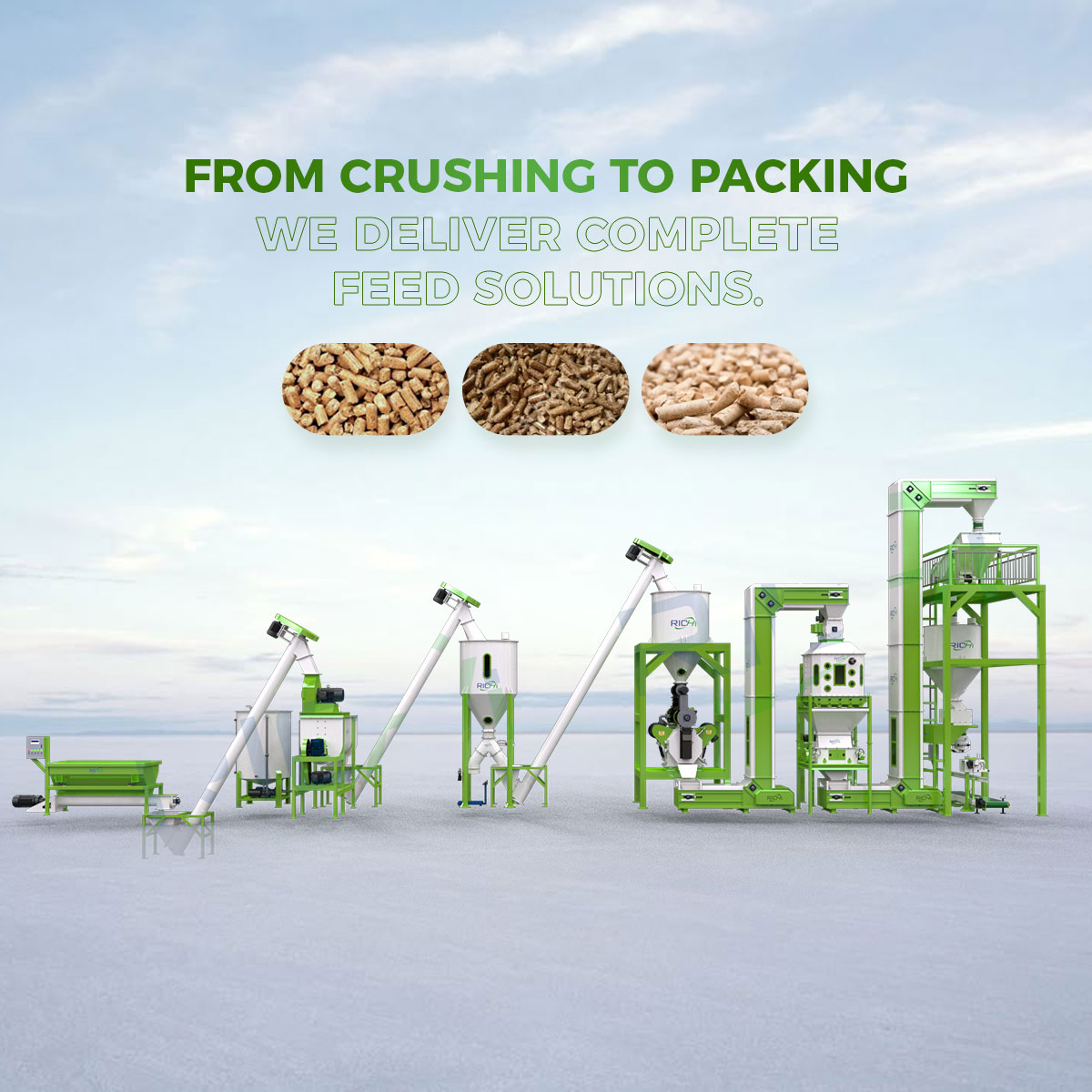
Plant layout and material flow design also change effective production capacity. Poorly designed workshops create bottlenecks at transfer points: bucket elevators, screw conveyors, sifters, and cooling sections can become hidden limits on throughput, even if your pelletizer itself has plenty of power. Raw‑material receiving bins, dosing silos, mixing stations, and post‑pelletizing cooling and screening sections need to keep pace with your pellet mill’s maximum output. A very common mistake is over‑investing in the pelletizer unit while skimping on upstream crushing, mixing, or downstream cooling capacity. When downstream sections cannot process material fast enough, you end up throttling back the pellet mill, so you never reach your designed hourly tonnage.
Automation level also affects consistency. Small farms may run semi‑manual set‑ups with human batch weighing. Mid‑size and commercial mills gain big advantages from PLC‑controlled batching systems. Automatic weighing keeps formula mixing error below ±1%. Uniform mixing guarantees consistent feed composition for every batch. If mixing performance drifts, different batches behave differently during pelletizing. Some batches produce hard, glossy pellets, while others generate excessive fines, even with unchanged pelletizer settings. Modern control platforms also log historical operating data: motor load, steam temperature, throughput rates, alarm events. Production managers review these logs to spot developing mechanical issues before full breakdowns take place.
Operator knowledge remains irreplaceable, even with highly automated equipment. Feed pelletizing systems contain many interacting variables. When raw‑material batches change, staff must adjust steam volume, conditioner retention time, roller‑die gap, cutter position, and cooling air flow accordingly. New operators frequently keep settings locked to one fixed value, regardless of incoming material shifts. This practice creates inconsistent product quality. Formal hands‑on training covers startup sequences, normal operating parameters, routine lubrication, common fault diagnosis, and safe shutdown procedures. Without this practical knowledge, expensive machinery will never deliver its full design potential. This is one area where complete project support delivers long‑term value. If you want deeper insights covering full‑project delivery workflows, check a knockout post.
When evaluating equipment suppliers, project delivery capability matters just as much as hardware specifications. Many trading companies sell standalone machines without deep process engineering background. They cannot support full workflow optimization for your local raw materials and site constraints. Richi Machinery brings decades‑long experience delivering complete feed and biomass pellet projects across more than 140 countries. Successful turn‑key projects do not stop once machinery leaves the factory. Manufacturing progress tracking, proper export‑grade packaging, clear shipping documentation, on‑site installation guidance, commissioning, hands‑on staff training, plus ongoing spare‑part supply and remote technical support all form part of a complete solution.
Project planning for new feed plants must also address utility requirements. Electrical power supply stability often gets overlooked. Large‑capacity pellet mills draw high peak current. Voltage fluctuation or unstable power phases cause motor overheating, trigger safety shutdowns, and shorten the service life of drive components. Site assessment should confirm transformer capacity, cable sizing, and backup power options. Steam boiler capacity represents another utility bottleneck. Under‑sized boilers cannot maintain steady steam pressure during full‑load pelletizing. Without enough reliable steam, starch gelatinization suffers, and you cannot achieve target pellet quality no matter how good your pelletizing equipment is.
Maintenance planning directly influences total plant profitability over years of operation. Many mill operators only perform repairs after something breaks. Reactive maintenance leads to unpredictable shutdowns and higher component replacement cost. Proactive maintenance schedules include daily visual checks, regular lubrication of bearings, weekly inspection of ring dies and rollers, and periodic tightening of bolt connections. Operators maintain service logs recording running hours, part replacement dates, and recurring small faults. These logs help project engineers diagnose performance drops quickly. Global spare‑part logistics also deserve attention. Long shipping lead‑times for critical wear parts can halt production for weeks. Smart operators keep a minimum local inventory of high‑consumption components: ring dies, rollers, seals, bearings, and filter bags.
Market shifts frequently push existing feed mills to consider line modification and capacity expansion. As local livestock or aquaculture industries grow, mill owners face two options: construct a completely new production plant, or retrofit and upgrade their existing facility. Retrofitting often costs far less than ground‑up construction. Possible upgrades include adding larger conditioners, installing higher‑capacity hammer mills, adding secondary cooling capacity, or swapping pellet mill core assemblies. However, retrofits demand careful engineering assessment. Existing building dimensions, foundation load limits, elevator throughput limits, and electrical infrastructure all constrain modification possibilities. Reviewing reference project information at https://pelletmakermachine.com/animal-feed-machine/ gives real context on what practical retrofits other feed‑mill operators have completed successfully.
Sustainability considerations increasingly shape modern feed‑mill design. Feed production consumes large volumes of electricity and thermal energy. Optimized equipment design reduces power consumption per ton of finished feed. Waste material recovery also improves margins. Dust collection systems capture fine feed dust from crushing and conveying sections; recovered dust can flow back into production loops instead of going to waste. Some mills integrate local agricultural residues as partial feed raw‑materials, lowering overall ingredient costs while supporting circular agricultural economics. Energy efficiency gains add up across thousands of production tons each year, improving operating margins without raising finished‑feed selling prices.
Risk assessment forms a key part of early‑stage project work. Investors should map out major risk points: volatility of local grain pricing, availability of skilled operators, reliability of public power supply, import customs clearance procedures for spare parts, and competition from existing feed suppliers. Many new entrepreneurs focus exclusively on equipment purchase cost, while underestimating ongoing operational risks. Building reasonable contingency budgets helps navigate unexpected hurdles. Working with engineering‑focused suppliers helps identify these risks during the design phase, rather than discovering them after plant construction finishes.
Different geographic markets bring distinct sets of challenges. In many African and South‑East Asian markets, power supply fluctuation is a persistent reality. Project engineers will adjust motor configurations and add protective electrical components. In cold northern regions, workshop insulation and steam‑line trace heating prevent condensate‑related quality trouble. In humid tropical territories, enhanced cooling and dehumidification become essential to stop finished pellets from molding during storage. A piece of equipment performing flawlessly in one region can struggle in another without appropriate custom adjustments to process and auxiliary systems.
Looking ahead, feed manufacturing technology continues gradual evolution. Improved sensor technology gives real‑time readings of pellet hardness, moisture, and power draw. These digital tools support semi‑automatic parameter tuning, reducing dependence on highly‑experienced veteran operators. Modular plant designs shorten construction timelines for green‑field projects. At the same time, rising feed‑ingredient prices push mills toward greater use of alternative local raw‑materials. This trend makes flexible, adaptable pelletizing hardware and custom‑tuned process workflows more valuable than ever before. No single fixed equipment configuration works perfectly for every location and business objective. Every successful feed‑mill project balances hardware performance, raw‑material realities, site conditions, human skill levels, and long‑term service support.
For people preparing to launch or expand feed‑making businesses, spend sufficient time analyzing every factor beyond headline machine tonnage numbers. Sample and test your actual local raw materials. Audit your site’s power, steam, and building constraints. Create realistic budgets for spare‑parts stock and operator training. Select partners that deliver full‑cycle engineering rather than just hardware sales. Paying close attention to these often‑overlooked practical details will deliver far better long‑term return than chasing only the lowest upfront equipment price.