


Walk into any poultry supply store, and you’ll see rows of bagged feed with prices that seem to climb every time you visit. The numbers on those tags tell a story—but not the whole story. Behind every bag of commercial feed lies a complex chain of processing, transportation, marketing, and profit margins that have nothing to do with the nutritional needs of your birds.
Here’s a question that rarely gets asked: what if you could skip that entire chain? What if you could produce the same quality feed—or better—right on your farm, for a fraction of the cost? What if the equipment to do it was more affordable and accessible than you ever imagined?
For poultry farmers, feed represents the single largest operating expense. In broiler production, feed costs can account for 65% to 70% of total variable costs. For layers, it’s typically 60% to 65%. These numbers are staggering. Every dollar saved on feed goes directly to the bottom line. And in an industry where net margins often hover around 5% to 10%, even small savings can be the difference between profit and loss.
Breaking Down the Cost of Commercial Feed
Let’s get specific. What are you actually paying for when you buy a bag of commercial poultry feed?
First, there are the raw ingredients: corn, soybean meal, wheat middlings, vitamins, minerals, and possibly some animal byproducts. These commodities fluctuate in price based on global markets, weather patterns, and trade policies. The feed mill pays these costs, but they don’t set the final price alone.
Then comes the processing. The ingredients must be ground, mixed, pelleted, cooled, and packaged. This requires specialized equipment, skilled operators, electricity, and maintenance. These costs are significant but relatively fixed.
Transportation adds another layer. Feed mills are rarely located next to the farms they serve. Trucks, fuel, and drivers all cost money. And if you’re in a remote area, freight charges can add substantially to your delivered price.
Marketing and distribution add their own margins. The feed company has sales teams, advertising, administrative overhead, and profit expectations. The retailer—whether a large chain or a local store—adds their own markup.
By the time that bag reaches your barn, you’re paying for all of these things. The actual cost of the raw ingredients might be 60% of the final price. Everything else is added value—value that you could potentially capture for yourself.
The Economics of On-Farm Mixing
This is where the opportunity lies. By producing your own feed, you eliminate the processing, transportation, marketing, and retail margins. You buy raw ingredients in bulk, at wholesale prices. You process them on your farm, using your own labor and electricity. The savings are substantial.
Independent analyses consistently show that on-farm feed production can reduce total feed costs by 15% to 25%. For a 10,000-bird broiler operation, that could mean $8,000 to $12,000 in annual savings. For a 50,000-layer facility, the savings could exceed $50,000 per year.
But there’s a catch. Producing quality feed on-farm requires the right equipment. You can’t just dump ingredients in a barrel and call it mixed. Poultry feed must be thoroughly blended to ensure that every bird gets the correct balance of nutrients. Uneven mixing can lead to nutritional deficiencies, reduced growth rates, and health problems.
The Mixing Stage: Foundation of Quality Feed
Before any feed can be pelleted, it must be properly mixed. A poultry feed mixer machine price is often the first question farmers ask when considering on-farm production. The answer varies widely depending on capacity, configuration, and features, but a quality vertical or horizontal mixer suitable for a mid-sized operation typically ranges from $3,000 to $15,000. This investment is modest compared to the annual savings it can generate.
Mixers come in two primary configurations for poultry feed. Vertical mixers are simpler, more affordable, and work well for dry ingredients. They use an auger to lift material from the bottom and drop it from the top, creating a tumbling action that blends ingredients over several minutes. Horizontal mixers are more sophisticated, using ribbon or paddle augers to create a thorough, consistent blend in less time. They are generally preferred for operations that produce feed daily and need to process different formulations.
The choice depends on your production volume and ingredient types. A vertical mixer might be sufficient for a 5,000-bird flock. A horizontal mixer offers better performance for larger operations or those incorporating liquid ingredients like molasses or oils. Many farmers start with a vertical mixer and upgrade later as their operation grows.
The Pelleting Stage: Unlocking Full Value
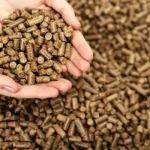
Mixing is essential, but pelleting is where the real magic happens. Unpelleted mash feed is dusty, prone to separation during handling, and inefficient for birds to consume. Chickens, like most poultry, are selective eaters. Given the choice, they’ll pick out the tasty bits—often the grains and fats—and leave behind the protein supplements and minerals they need for balanced nutrition. This selective feeding leads to wasted ingredients and uneven growth.
Pelleting solves this problem by binding every ingredient into a uniform, bite-sized pellet. Every pellet contains the exact same proportions of every ingredient in the formulation. There’s no sorting, no separation, and no waste. Birds eat the entire ration, and they do it efficiently.
The heat and pressure of pelleting also improve digestibility. Starches are gelatinized, making them easier for birds to break down. Proteins are partially denatured, improving amino acid availability. The result is better feed conversion—more weight gain or more eggs per pound of feed consumed.
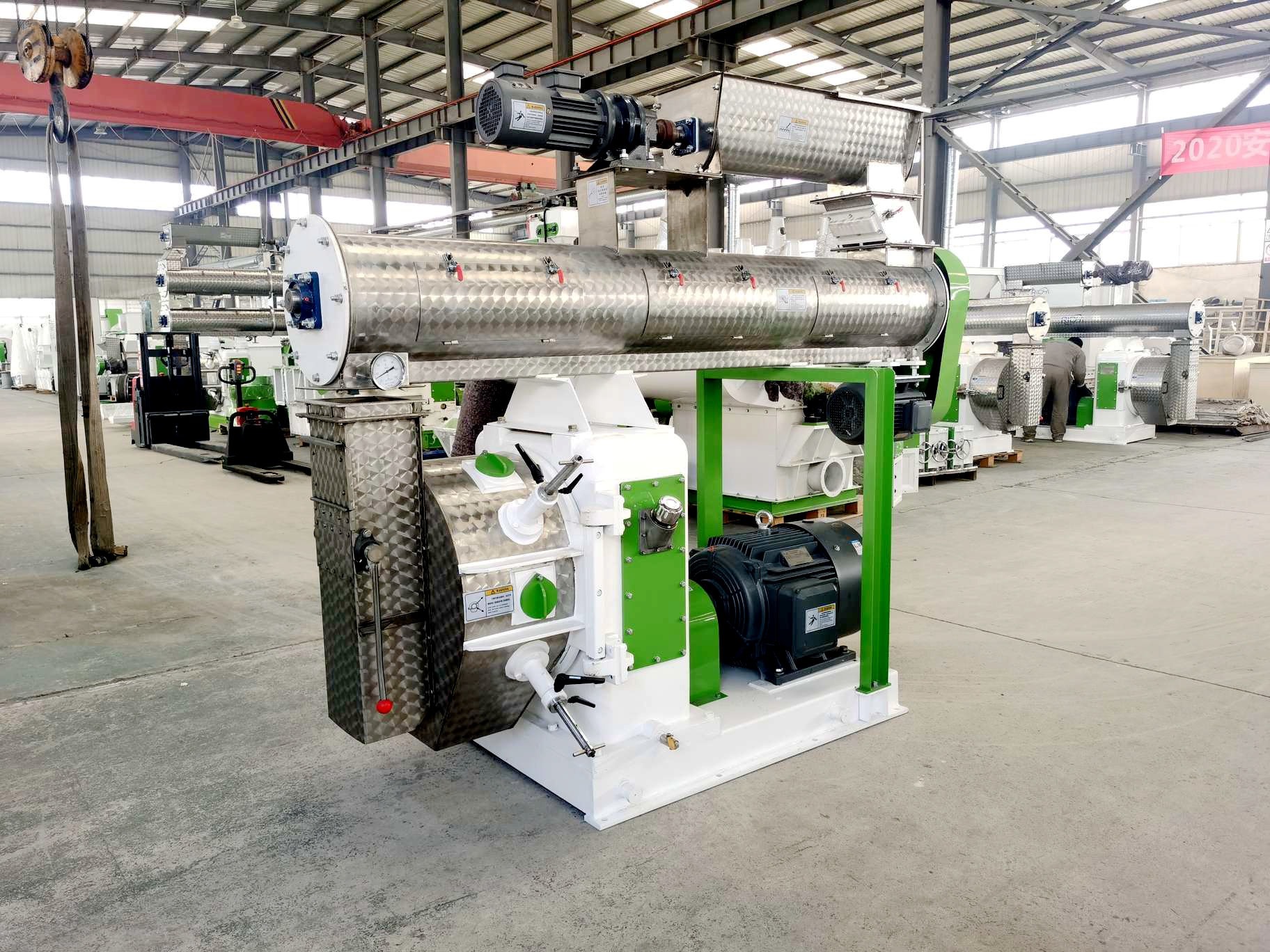
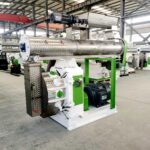
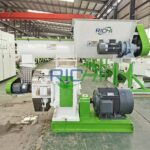
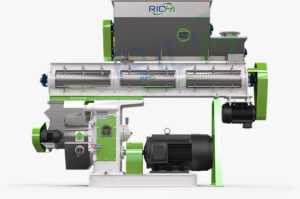
For commercial-scale production, an automatic poultry feed pellet making machine is the standard solution. These machines are designed for continuous operation, with capacities ranging from 500 kg/h for small operations to 20 tons per hour or more for industrial facilities. The automatic features include variable-speed feeders, steam conditioning systems for optimal moisture and temperature control, and quick-change die mechanisms for different pellet sizes. A quality unit in the 1-3 ton/hour range typically costs between $20,000 and $50,000, depending on configuration and included features.
The Farmer Who Did the Math
Ahmed had been raising broilers in Egypt for eight years. His operation was modest—about 8,000 birds per cycle, four cycles per year. He was profitable, but he knew he could do better. The feed bill was eating up nearly 70% of his gross revenue. Every time the price of commercial feed went up, his margins shrank.
He started asking questions. He visited other farms, attended agricultural exhibitions, and spent hours online researching equipment. He learned about the costs of raw ingredients and compared them to the price he was paying for finished feed. The difference was eye-opening.
He calculated that by producing his own feed, he could save about 20% on his annual feed bill. That would be roughly $10,000 per year—enough to make a real difference to his family’s income. He allocated a budget and purchased a feed mixer and pellet mill combination.
The poultry feed mixer machine price was about $4,500 for a vertical model suitable for his volume. The **automatic poultry feed pellet making machine** cost him $28,000. Total investment: about $32,500.
In the first year, he saved $11,200 on feed costs. His birds grew faster and more uniformly. Mortality dropped slightly because the feed quality was more consistent. He was so pleased that he expanded to 12,000 birds per cycle the following year. The equipment paid for itself in just over two and a half years. Everything after that is pure profit.
Why Quality Manufacturing Matters
The market for feed processing equipment is crowded, with suppliers ranging from backyard fabricators to established industrial manufacturers. Price differences can be significant, but the cheapest option is rarely the best value.
Feed processing equipment operates in demanding conditions. Hours of continuous operation, abrasive ingredients, variable moisture, and heavy loads all take their toll. A machine with thin metal, undersized bearings, or poorly hardened dies will require frequent repairs and replacements. Downtime costs money. Replacement parts cost money. Frustration costs even more.
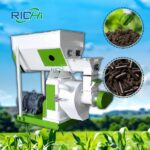
For farmers making a long-term investment, equipment quality is critical. A Richi Pellet Mill has earned a strong reputation among poultry producers for durability, reliability, and after-sales support. Their machines are built with heavy-gauge steel, oversized bearings, and precision-machined dies that maintain their tolerances even under continuous operation. The automatic control systems allow for precise adjustment of feed rate, conditioning, and output, ensuring consistent pellet quality across production runs.
The company also offers comprehensive technical support, including installation guidance, operator training, and maintenance advice. This support is invaluable for first-time producers who are learning the craft of feed manufacturing. When a problem arises—and it will, eventually—having responsive support can mean the difference between a brief interruption and a costly shutdown.
The Complete System Approach
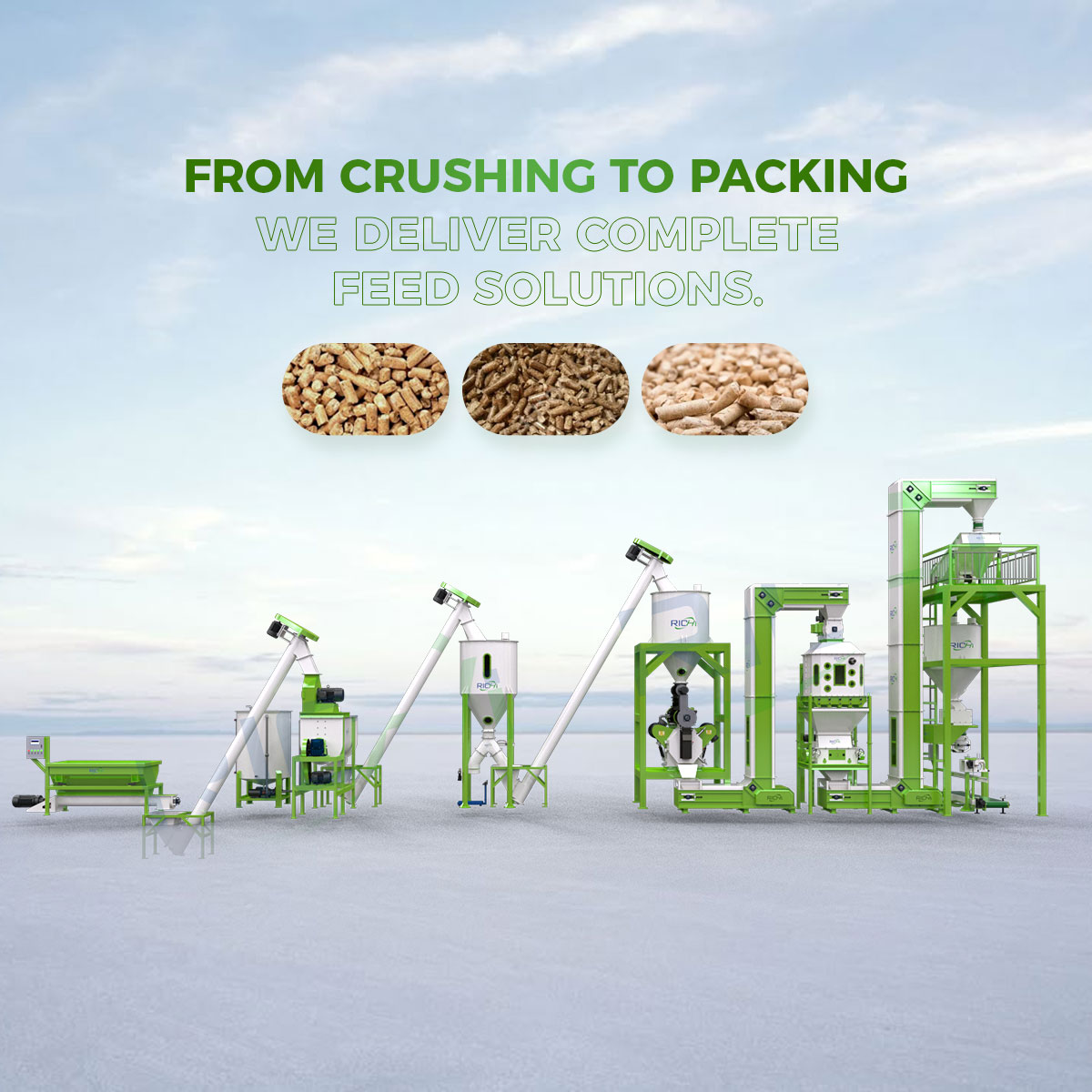
A mixer and a pellet mill are the core components, but a complete on-farm feed production system typically includes additional equipment:
A hammer mill or crusher prepares raw grains by reducing them to the correct particle size. Proper grinding is essential for thorough mixing and effective pelleting.
A weighing and batching system ensures accurate proportions of each ingredient. Nutritional consistency depends on correct formulation every batch.
A cooler reduces the temperature of freshly pelleted feed to prevent condensation and spoilage during storage.
A screener removes fines and broken pellets, which can be recycled into the next batch.
A bagging or bulk storage system prepares the finished product for feeding or sale.
The total investment for a complete system varies widely based on capacity and automation level. A small setup for a 5,000-bird operation might cost $30,000 to $50,000. A fully automated line for 100,000 birds could exceed $200,000. The economics scale accordingly, with larger operations achieving lower per-ton costs and faster payback periods.
Beyond Cost Savings: Strategic Advantages
The financial benefits of on-farm feed production are compelling, but there are other advantages worth considering.
Control over ingredients is a major factor. Commercial feed mills source ingredients from wherever they can get the best price, which means the quality and consistency of the final product can vary. When you produce your own feed, you know exactly what you’re feeding your birds. You can choose high-quality ingredients, verify their source, and avoid the fillers and additives that some commercial mills use to reduce costs.
Flexibility in formulation is another benefit. Different production stages require different nutritional profiles—starter, grower, finisher, and layer rations all have unique requirements. Commercial feed mills can produce custom formulations, but they usually require minimum order quantities and charge premiums for non-standard mixes. When you produce on-farm, you can switch formulations instantly based on the age and condition of your flock.
Feed safety is increasingly important in an era of disease concerns. Producing your own feed reduces the risk of contamination from external sources and gives you control over biosecurity protocols. This is particularly valuable for operations that want to maintain antibiotic-free or organic certification.
Read here: https://pelletizerextruder.com/poultry-feed-mixer-machine-price/
The Future of Poultry Feed Production
The trend toward on-farm feed processing is accelerating. Technology is becoming more affordable and accessible. Ingredients are increasingly available through local suppliers. Farmers are recognizing the strategic value of controlling their input costs.
Automation is making the process more accessible to smaller operators. Modern equipment includes user-friendly controls, automated safety features, and remote monitoring capabilities. The days of needing a specialized feed mill operator are fading; today’s equipment is designed for farmers, not engineers.
Sustainability is also driving interest. Local feed production reduces transportation fuel consumption and emissions. Efficient processing reduces waste and improves feed conversion, which means less land, water, and energy required per bird. For farmers serving environmentally conscious markets, these benefits have real value.
Making the Decision
The decision to invest in on-farm feed production is not one to take lightly. It requires capital, planning, and a willingness to learn new skills. But for poultry farmers looking to reduce costs and build a more resilient operation, the rewards are substantial.
Start by doing the math. Calculate your current feed costs. Identify potential savings from on-farm production. Research equipment options and get quotes. Consider the payback period and whether the investment aligns with your long-term goals.
Visit farms that have already made the transition. Talk to equipment suppliers. Attend demonstrations at agricultural shows. The information is available—you just need to seek it out.
Ultimately, the question is not whether you can afford to produce your own feed. The question is whether you can afford not to.